Key Takeaways
- LED mini lights use up to 80% less energy than incandescent and last 10× longer — a significant cost difference across a New Hampshire winter season.
- Proper spacing varies by application: plan 100 lights per vertical foot of tree, 1 strand per linear foot of railing, and 150–200 lights per large shrub.
- Warm white suits cozy residential settings and rustic venues; cool white works best for modern homes and commercial storefronts; multicolor is the classic choice for traditional holiday displays.
- Commercial-grade mini lights are built with heavier wire gauges, end-to-end connectors, and weather sealing rated for New Hampshire's freeze-thaw cycles — worth the investment for rooflines and public-facing displays.
- Professional installation ensures correct strand counts, safe electrical load balancing, and long-term storage that keeps bulbs and wires intact season after season.
Step outside on a clear December night almost anywhere in New Hampshire — Concord, Portsmouth, Laconia, Keene — and you'll notice that the houses people slow down to admire all share one thing: confident, deliberate use of mini lights. Not random strands tossed over a shrub, but layered, evenly spaced, intentionally colored light that turns a colonial farmhouse or a lakeside Cape into something genuinely magical. Mini lights are the workhorse of holiday and event lighting, and yet most people never learn the rules that separate a professional result from a tangled mess. This guide covers everything: energy costs, spacing formulas, color temperature decisions, and the real difference between residential and commercial-grade products — so your next display looks like it was designed, not improvised.
What Are Mini Lights and Why Do They Dominate Holiday Decorating?
Mini lights are small-bulb string lights — typically featuring bulbs 5/8" to 3/4" in diameter — that have been the cornerstone of American holiday decorating since the 1970s. They replaced the heavy, heat-producing C7 and C9 bulbs on delicate applications like tree branches, garlands, and wreaths, and they remain the most versatile product in any professional installer's kit. For context on how the industry evolved toward today's options, see our history of holiday lighting in New England.
Modern mini lights come in two core technologies — LED and incandescent — and in wire colors (green, white, black, brown) that should be chosen to disappear against the surface they're attached to. Understanding those two variables alone will save you money and frustration before you purchase a single strand.
LED vs. Incandescent Mini Lights: The Real Energy Cost in New Hampshire
LED mini lights consume roughly 80% less electricity than equivalent incandescent strands, a gap that adds up quickly during a 45-to-60-day New Hampshire holiday season with 6–8 hours of nightly use.
Side-by-Side Numbers
| Feature | Incandescent Mini Lights | LED Mini Lights |
|---|---|---|
| Watts per 100-bulb strand | ~40W | ~4–6W |
| Estimated cost per strand / season* | ~$6.00–$8.00 | ~$0.60–$1.00 |
| Bulb lifespan | 1,500–3,000 hours | 25,000–50,000 hours |
| Heat output | Significant — fire risk on dry garlands | Minimal — safe on fresh greenery |
| Cold-weather performance (NH winters) | Bulbs can dim in sub-zero temps | Performs reliably down to -40°F |
| Color consistency | Varies bulb to bulb over time | Uniform throughout lifespan |
*Estimate based on 7 hours/night × 50 nights × NH average residential electric rate (~$0.22/kWh as of 2024).
A home running 30 strands of incandescent mini lights can easily spend $180–$240 in electricity over one season. The same display in LED costs under $30. Over three to five seasons — the realistic lifespan of quality LED strands — the savings dwarf the higher upfront purchase price. For commercial properties running hundreds of strands, the math is even more compelling.
One Caveat: Color Rendering
Some decorators still prefer the softer glow of incandescent warm white for indoor trees and close-up garland work, where the slight warmth and slight irregularity feel organic. For anything outdoors in New Hampshire weather — rooflines, fences, large trees — LED is the professional standard without exception.
Spacing Rules for Trees, Bushes, and Railings
Correct spacing is the single biggest difference between a display that looks planned and one that looks patchy. These formulas are the same ones professional installers use on residential and municipal projects throughout New Hampshire.
Trees
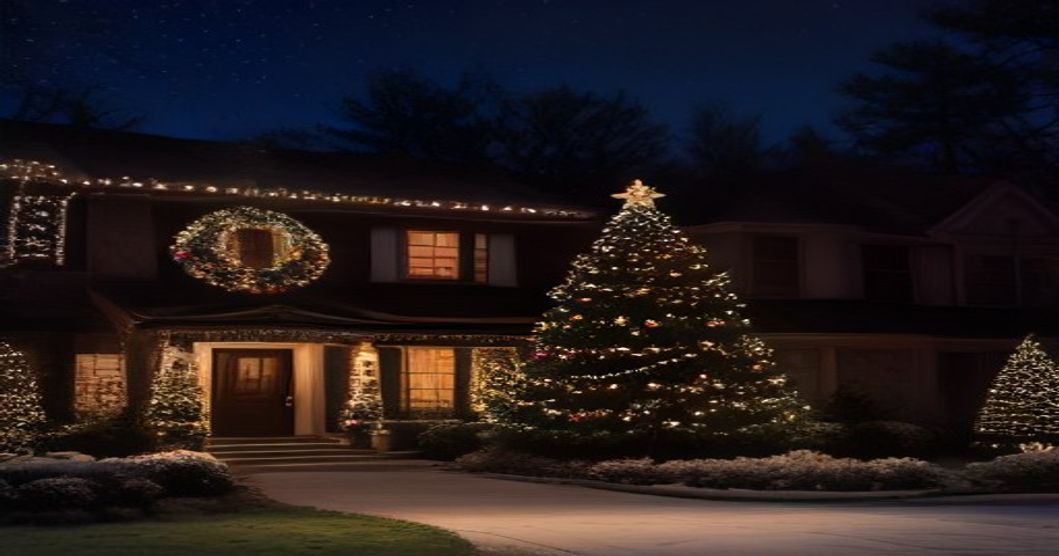
- Small ornamental trees (under 6 ft): 100 lights per vertical foot of height. A 4-foot ornamental in a front yard = 400 lights minimum.
- Medium shade trees (6–15 ft): 150–200 lights per vertical foot when wrapping the full canopy. A 10-foot Japanese maple = 1,500–2,000 lights.
- Large canopy trees (15 ft+): Professional installers use net lighting or calculated spiral wraps. Plan 200+ lights per foot and budget for extension runs. See our full breakdown in professional tree wrapping lights in New Hampshire.
- Always wrap from trunk outward to branch tips — never the reverse — for a natural, dimensional look.
- Use green wire on evergreens, brown wire on bare deciduous trees.
Shrubs and Foundation Plantings
- Small compact shrubs (boxwood, dwarf Alberta spruce under 3 ft): 100–150 lights woven throughout the interior and exterior branches.
- Medium rounded shrubs (juniper, holly, 3–5 ft): 150–200 lights, starting from the base and spiraling upward.
- Large irregular shrubs or hedges (5 ft+): Use net lighting for uniform coverage, or plan 1 strand per square foot of surface area.
Railings, Fences, and Rooflines
- Porch railings: 1 strand (100 lights) per linear foot for a lush wrapped look; 1 strand per 2 feet for a lighter spiral. Most New Hampshire colonial porches run 20–40 linear feet.
- Picket or split-rail fences: Weave strands through the uprights at roughly 1 strand per 3 feet for an elegant rather than dense effect.
- Rooflines: C9 bulbs are more common here, but mini lights on gutters create a fine-textured icicle effect — plan 1 strand per 2 linear feet of drip edge. Read the full roofline breakdown in our roofline lighting installation overview.
Garlands and Wreaths
For standard 9-foot garlands, 100 mini lights woven evenly through the boughs provides full coverage without overheating. Wreaths under 24" diameter take 50–75 lights; 24"–36" wreaths take 100–150. Pair mini lights on garlands with coordinated decorative bows and wreath accents for a layered, complete look.
Warm White vs. Cool White vs. Multicolor: Choosing the Right Setting
Color temperature is one of the most consequential decisions in any lighting design, yet it's often chosen impulsively. Each of the three primary mini light color families serves different architectural styles, events, and client goals.
Warm White (2700K–3000K)
Warm white mini lights emit a golden, amber-tinged glow that reads as intimate and timeless. They are the dominant choice for:
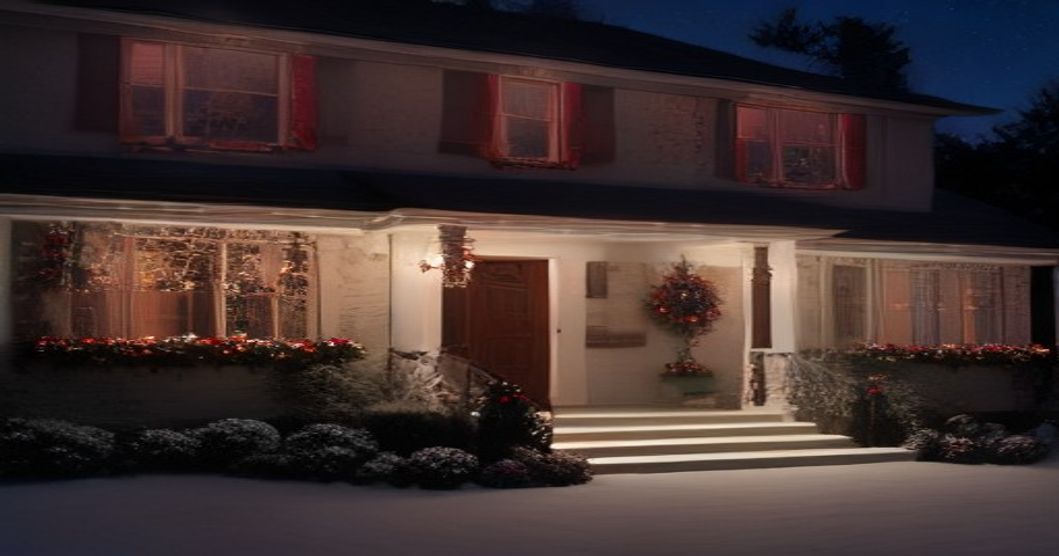
- Traditional New Hampshire colonial and cape-style homes where you want to enhance rather than contrast the architecture.
- Rustic barn venues and farmhouse properties — perfect companions to the look covered in our NH barn wedding lighting guide.
- Wedding ceremonies and receptions where soft, romantic ambiance is the goal.
- Garlands, mantels, and interior tree displays where the color should feel like candlelight.
Cool White (5000K–6500K)
Cool white mini lights have a crisp, blue-toned brightness that reads as modern and clean. Best fits include:
- Contemporary homes with clean lines, white or gray exteriors, and minimal ornamentation.
- Commercial storefronts and office buildings seeking a professional, high-visibility look — strong for window display lighting in downtown districts.
- Winter-themed displays where the goal is to evoke ice and snow — a particularly resonant choice in New Hampshire's Lakes Region and White Mountains.
- Municipal displays on public trees and monuments where brightness and visibility over distance matter.
Multicolor
Multicolor mini lights — typically featuring red, blue, green, orange, and yellow bulbs in alternating sequence — remain the most recognized symbol of holiday tradition in America. They're the right call for:
- Families seeking a classic, nostalgic look on their primary Christmas tree or front yard display.
- Neighborhood association and community displays where broad, inclusive appeal matters.
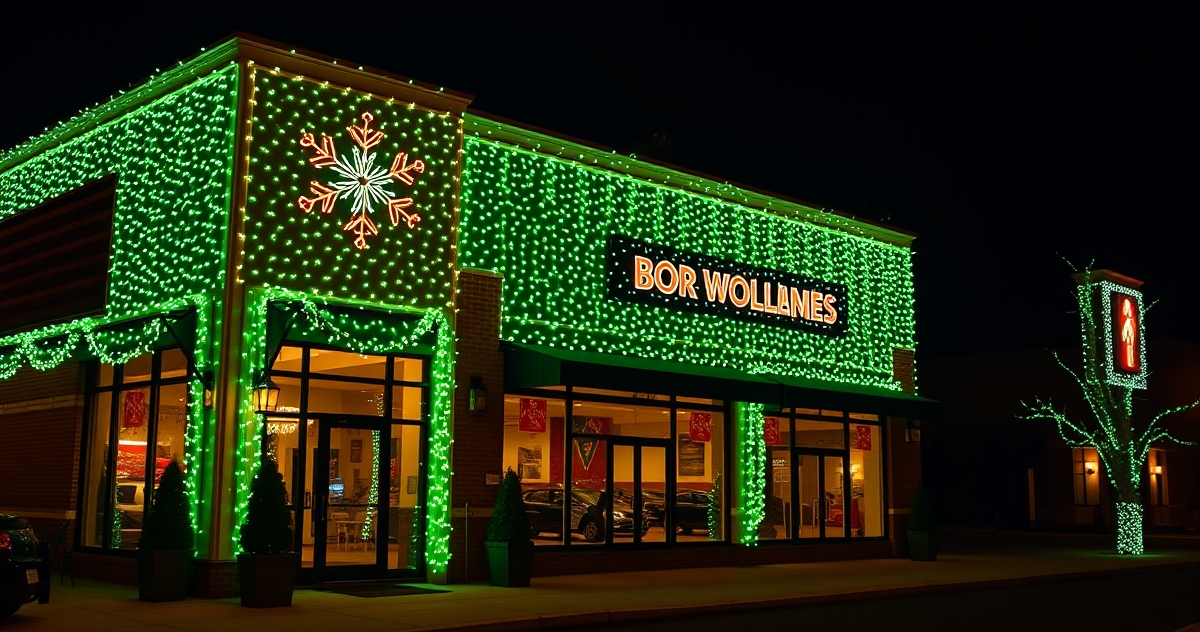
- Retail and commercial settings that want maximum festive energy and customer attention.
- Children's events and community gatherings where visual excitement is the priority.
Pro tip: Never mix color temperatures on the same continuous structure. Warm white on a tree trunk transitioning to cool white at the canopy will read as a mistake, not a design choice. Commit to one color family per structure and transition intentionally between separate elements.
Commercial-Grade vs. Residential Mini Lights: What NH Homeowners Need to Know
Commercial-grade mini lights are not simply more expensive versions of the same product — they are fundamentally different in construction, and the difference matters in a New Hampshire climate that delivers ice storms, 50-mph wind gusts, and temperature swings of 60°F within a single week.
Key Construction Differences
- Wire gauge: Commercial strands use 22-gauge wire vs. the 28-gauge common in retail box-store products. Heavier gauge means lower resistance, less heat buildup, and safer multi-strand connections.
- Bulb seating: Commercial bulbs are locked into their sockets with a rubber gasket. Retail bulbs pop loose in wind and temperature cycling, causing dead sections mid-display.
- End-to-end connectors: Professional strands are designed to connect 40–50 runs in sequence on a single circuit without voltage drop. Retail strands typically max out at 3–5 end-to-end connections before dimming becomes visible.
- UV-stabilized insulation: Commercial wire jackets resist cracking in UV exposure and extreme cold, critical for NH installations that sit on rooflines from Thanksgiving through January.
- Fusing: Commercial strands have individual fused plugs and often inline fuses, reducing fire risk when an overload occurs.
When Residential Grade Is Fine
For a single indoor tree, a short interior garland, or a low-stakes temporary display you'll take down in two weeks, residential-grade strands from a reputable brand (not the cheapest bin option) work perfectly well. The issue arises when homeowners use retail strands for rooflines, large tree wraps, or long railing runs — applications where the strand will experience real weather stress and where a failure mid-season means a safety issue or an unsightly dark patch on a public-facing display.
If you're unsure which grade your project calls for, our team at Holiday Lights Decor New Hampshire sources commercial-grade product exclusively and can assess your property's needs before you spend a dollar on materials. Request a free estimate and we'll walk you through exactly what your display requires.
Professional Installation vs. DIY: When to Call in the Team
Mini lights look deceptively simple until you're on a ladder in November, sorting tangled strands in 28°F weather, realizing you've run out of lights halfway down the roofline. Professional installation delivers three things DIY rarely achieves: consistent strand tension, safe electrical load calculations, and a storage system that means your lights come out next season ready to use.
For tree lighting involving large canopy trees, always hire professionals — the combination of height, strand management, and proper anchor points is genuinely hazardous without training and equipment. The same applies to roofline work, any structure above two stories, and commercial properties where code compliance and liability matter.
Our removal and storage service is one of the most underrated offerings we provide: strands are removed, tested, repaired as needed, labeled, and stored in climate-controlled conditions so they're ready for reinstallation the following season without degradation. It extends the life of commercial-grade product dramatically.
If you're planning ahead — and in New Hampshire, booking early is genuinely important — read our guide on why booking your holiday lights installation in June pays off. The best installation windows fill up months in advance.
Frequently Asked Questions
How many mini lights do I need for a 6-foot Christmas tree?
A full 6-foot Christmas tree with good branch density needs approximately 600 mini lights for a lush, professional result — that's the 100-lights-per-foot rule applied to tree height. If you prefer a lighter look, 400 lights is the minimum before the display starts to look sparse. Use warm white for a traditional feel, cool white for a modern or winter-themed tree. Always use LED strands on fresh trees to eliminate heat buildup near dry needles.
Can I connect multiple strands of mini lights together?
Yes, but the limit depends on the grade of strand. Residential mini light strands are typically rated for 3–5 end-to-end connections before voltage drop causes visible dimming near the end of the run. Commercial-grade strands can be connected 40–50 in sequence on a properly sized circuit. Always check the manufacturer's maximum wattage rating per outlet circuit (typically 1,440W for a standard 15-amp circuit in the US) and never exceed it. For large runs — railings over 50 feet, full-house rooflines — consult a professional installer to map your circuit loads safely.
What's the difference between warm white and soft white mini lights?
"Soft white" is a marketing term used inconsistently by different manufacturers, but it typically refers to a color temperature between 2700K and 3000K — essentially the same range as warm white. True warm white sits at 2700K–3000K and produces the golden, slightly amber glow most people associate with traditional holiday lighting. Some brands use "soft white" to mean a slightly cooler 3000K–3500K output. When in doubt, compare actual strands side by side before purchasing, or specify a Kelvin number when ordering commercial product.
Are mini lights safe to use on live Christmas trees and fresh garlands?
LED mini lights are safe for use on live trees and fresh-cut greenery — they produce minimal heat and won't accelerate drying. Incandescent mini lights generate enough heat to be a genuine fire risk on dry material, especially late in the season when a cut tree has lost moisture. If you're using incandescent strands on any live greenery, check the tree's water level daily, ensure no strand is resting against the trunk for an extended period, and always turn lights off when leaving the house or going to sleep. For garlands and wreaths on mantels near heat sources, always use LED.
How do I prevent mini light strands from tangling during storage?
The single most effective method is the "figure-eight wrap" around a piece of cardboard, a cord reel, or a dedicated storage spool — never a free-form ball. Label each strand with a tag noting its length, color, and where it was used. Store in sealed plastic bags or bins to prevent moisture infiltration, and keep in a climate-controlled space rather than an unheated garage or barn where freeze-thaw cycling degrades the wire insulation. Our professional removal and storage service handles all of this systematically, and clients who use it report dramatically fewer strand failures season over season.
What's the best mini light color for a New Hampshire winter wedding?
Warm white is the dominant professional choice for New Hampshire winter weddings — it flatters skin tones, complements white or ivory florals, and creates the intimate, candlelit atmosphere most couples are seeking. Cool white works beautifully for a winter wonderland theme, especially in venues with reflective surfaces like windows, mirrors, or snow-covered outdoor settings. Avoid multicolor for wedding ceremonies; it introduces a playful, casual energy that conflicts with formal event aesthetics. For full guidance on wedding lighting applications, see our outdoor wedding lighting guide for New Hampshire and our wedding arch and garland lighting overview.
Mini lights reward planning and precision. Whether you're dressing a single front door garland or lighting a full commercial property across downtown Portsmouth, the decisions you make about grade, spacing, color, and technology define whether the result looks amateur or exceptional. The team at Holiday Lights Decor New Hampshire brings that precision to every project — residential, commercial, and everything in between. Contact us for a free estimate and let's design a display that New Hampshire will actually stop to look at.