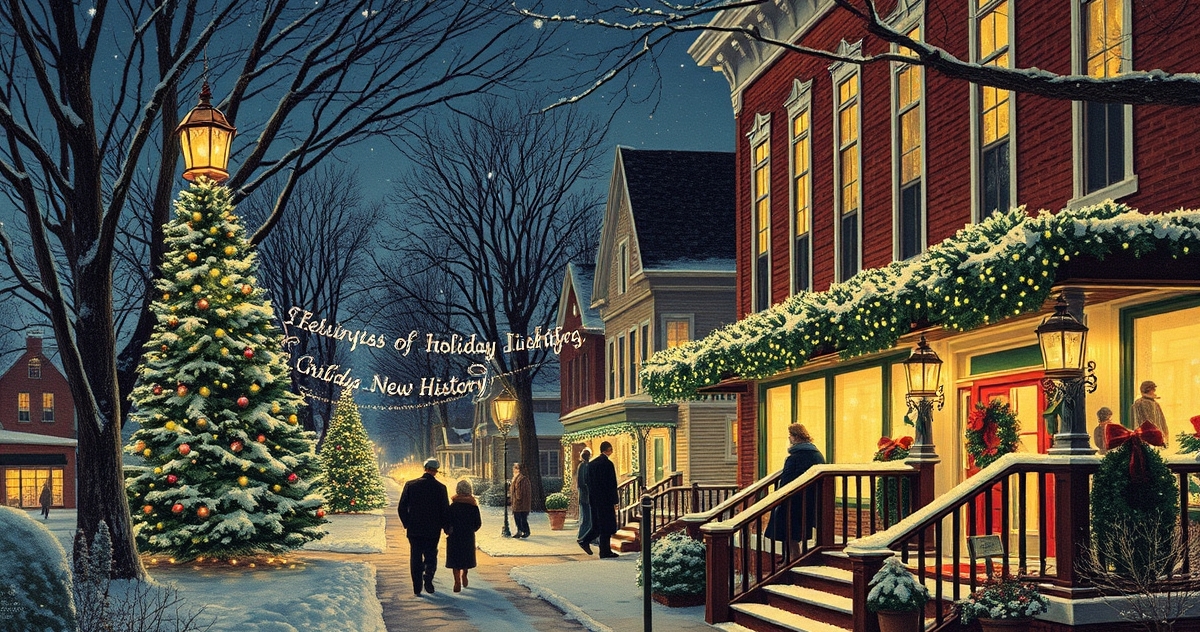
Long before the first professional holiday lighting company ever pulled a ladder off a truck, New England's town commons were already glowing. Lanterns and candles flickered in church windows. Hand-strung evergreen boughs arched over village storefronts. And in the cold, clear air of a December night in New Hampshire, the light from a single warm white bulb could travel what seemed like forever across a dusting of fresh snow. That image — intimate, community-rooted, deeply seasonal — is where the business of holiday lighting in New England truly begins.
Understanding this history isn't just a nostalgic exercise. It explains why New England, and New Hampshire in particular, developed some of the most durable, innovative, and visually distinctive holiday lighting traditions in the country — and why professional installation services like ours at Holiday Lights Decor New Hampshire exist to carry that tradition forward today.
Town Common Traditions: The Roots of American Holiday Décor
New England's town common is one of the oldest civic institutions in America, and it has always played a central role in how communities mark the holiday season. In the 18th and 19th centuries, holiday light was purely functional — oil lamps and later gas lanterns illuminated pathways to churches and meeting halls during the dark December evenings. But as electricity arrived in New England's small cities and towns in the late 1800s and early 1900s, something shifted.
Municipal governments began stringing electric lights on town trees, across storefronts, and along Main Streets as a way to draw shoppers and celebrate the season publicly. These civic displays were community efforts — organized by local merchants, funded by town budgets, and assembled by volunteers. The tradition of gathering around a lit town tree, something we still see today in communities from Concord to Conway, is a direct descendant of these early communal efforts.
What made New England's approach distinctive was its emphasis on restraint and elegance. Where other regions leaned into spectacle, Yankee sensibility favored clean lines, classic color palettes like warm white and deep green, and displays that complemented historic architecture rather than overwhelming it. This aesthetic DNA would later influence what professional holiday lighting companies across the entire country came to consider the "New England look" — a benchmark of tasteful, timeless holiday style.
The Rise of Professional Christmas Lighting Companies in the 1990s
For most of the 20th century, holiday lighting was a DIY affair. Homeowners draped C9 bulb strands along their rooflines, wrapped porch railings in multicolor garlands, and balanced precariously on aluminum ladders to hang wreaths on their peaks. It was a beloved ritual — and also, fairly frequently, a dangerous one.
The 1990s changed the equation. Several forces converged to create demand for professional holiday lighting services. Suburbs expanded rapidly across New England, and homes grew larger and more architecturally complex. Two-income households had less time for seasonal projects. And homeowners associations began setting higher standards for curb appeal, including during the holiday season. Suddenly, there was a market for a service that hadn't formally existed before: expert, insured, fully managed holiday light installation.
The first professional holiday lighting companies in New England emerged from related trades — landscaping, electrical contracting, and property maintenance. They understood outdoor work, they had the equipment, and they had existing client relationships. By the mid-1990s, a small but growing number of companies were offering seasonal lighting packages that included installation, maintenance, takedown, and storage. The concept was straightforward: let professionals handle it, and your home looks better, safer, and more consistent year after year.
New Hampshire was well-positioned to support this emerging industry. Its combination of affluent suburban communities, scenic small towns, thriving commercial districts, and a strong tradition of home pride created natural demand. Companies serving residential clients found enthusiastic customers who appreciated both the aesthetic results and the time savings.
New Hampshire's Climate: The Engine of Outdoor Light Innovation
If you want to understand why holiday lighting hardware has evolved so dramatically over the past fifty years, spend one New Hampshire winter outdoors. The combination of extreme cold, heavy snow loads, ice storms, freeze-thaw cycles, and punishing winds creates conditions that expose every weakness in outdoor lighting equipment. What works in a mild climate will fail spectacularly in New England — and the market responded by demanding better products.
The humble C9 bulb is a perfect case study. The classic C9 strand — those large, faceted, often multicolor bulbs that defined Main Street displays from the 1950s through the 1980s — was originally designed for indoor use or mild outdoor conditions. In New Hampshire, they cracked, faded, and shorted out at an alarming rate during cold snaps. Installers and suppliers pushed manufacturers for tougher housings, better wiring insulation rated for sub-zero temperatures, and socket designs that wouldn't admit moisture and ice.
The result was a generation of genuinely cold-weather-rated C9 products that became the backbone of New England's commercial and residential displays. Those improvements, driven largely by demand from northern states like New Hampshire, eventually became industry standards nationwide. Our local climate didn't just challenge the holiday lighting business — it made the entire industry stronger.
Beyond bulb durability, New Hampshire installers pioneered improved mounting hardware for pitched rooflines common in colonial and cape-style architecture, developed clip systems that held firmly through ice loading, and refined layout techniques that accounted for the way snow accumulation changes the visual silhouette of a display. These practical innovations, developed by working professionals solving real problems in real New England winters, remain relevant today. You can read more about modern roofline installation approaches in our roofline lighting installation overview.
Fifty Years of Change: From C9 Strands to Smart LED Systems
The arc of holiday lighting technology over the past half-century is one of the most dramatic transformation stories in the home improvement industry. In 1975, a professional holiday display meant incandescent C9 bulbs in warm white or classic multicolor, strung on rubber-coated wire, consuming enormous amounts of electricity and generating enough heat to melt snow — or occasionally ignite dry evergreen branches.
The 1980s brought miniaturization. Mini Lights — tiny incandescent bulbs on fine wire strands — made it possible to wrap trees and shrubs with unprecedented density and delicacy. New England's tradition of decorating ornamental trees and foundation plantings exploded in popularity as mini lights became affordable. A single well-wrapped ornamental tree, lit in warm white against a snowy New Hampshire evening, became one of the defining images of the era. Our professional tree wrapping services carry on this tradition with modern precision and materials.
The 1990s and early 2000s introduced commercial-grade products to the residential market. Companies that had been supplying municipalities and large retail properties began offering similar quality hardware to homeowners willing to invest in longer-lasting, more professional-looking displays. Garlands with integrated lighting, pre-lit Wreaths, decorative Bows with wire frames designed to hold their shape through winter weather — all of these became part of the professional installer's toolkit.
LED technology arrived as a game-changer around 2005-2010. The energy savings were dramatic — LEDs consume roughly 75% less power than comparable incandescents — but the early adopters in New England had mixed feelings. The first generation of LED holiday lights produced a cold, slightly harsh light quality that many clients found off-putting compared to the warm glow of incandescents. The industry listened, and today's warm white LED C9 bulbs are virtually indistinguishable from their incandescent predecessors in color quality, while lasting dramatically longer and surviving New Hampshire winters with far greater reliability.
Smart control systems represent the current frontier. Programmable timers, app-controlled color-changing LEDs, and synchronized multi-zone displays that were once the exclusive province of theme parks and major commercial installations are now accessible for residential and municipal clients. New Hampshire municipalities have been early adopters, recognizing that modern systems reduce long-term maintenance costs while delivering more impressive public displays. For those curious about how smart lighting fits into modern holiday planning, our 2026 installation guide covers the latest options in detail.
The Modern Professional Holiday Lighting Industry in New Hampshire
Today, the professional holiday lighting industry in New Hampshire serves a remarkably diverse range of clients. Residential homeowners value the combination of expert design, quality materials, and the safety of having professionals handle ladder work on steep, icy rooflines. Commercial clients — retailers, restaurants, hotels, and office parks — understand that exterior holiday lighting is a direct investment in customer attraction and brand perception during the critical holiday shopping season.
Municipal clients represent a particularly meaningful segment of the market. When a New Hampshire town contracts for professional holiday lighting on its common, bandstand, and Main Street, it is consciously investing in the same community tradition that began with those early electric displays a century ago. The technology has changed dramatically; the purpose — bringing light, warmth, and shared celebration to a community in the darkest weeks of the year — has not changed at all. You can learn more about our work with towns and cities on our municipal services page.
The services we offer today at Holiday Lights Decor New Hampshire reflect eighteen years of working in this state's unique conditions. We've learned which products perform reliably through February ice storms and which ones fail by Thanksgiving. We've developed installation techniques calibrated for New Hampshire's architectural vernacular — the long rooflines of colonial homes, the dramatic peaks of Victorian-era commercial buildings, the clean modernism of new construction. Every display we design draws on that accumulated knowledge.
If you're interested in exploring the full range of what modern professional holiday lighting can do for your home, business, or community, we invite you to visit our services overview and our project gallery for inspiration.
Frequently Asked Questions
When did professional holiday lighting companies first appear in New Hampshire?
Professional holiday lighting as a dedicated service emerged primarily in the 1990s in New Hampshire, growing out of related trades like landscaping and electrical contracting. As homes grew larger, schedules grew busier, and expectations for curb appeal rose, demand for expert installation and management services created a sustainable market that has grown steadily ever since.
Why are C9 bulbs so associated with New England holiday displays?
C9 bulbs became the standard for outdoor commercial and residential displays in New England starting in the mid-20th century because their size and brightness translated well to large-scale architectural applications — rooflines, storefronts, and town common displays. New England's harsh winters actually drove manufacturers to improve C9 durability, making them more reliable in cold weather. Today's LED C9s in warm white and multicolor carry on this tradition with far greater energy efficiency and longevity.
How has New Hampshire's climate influenced holiday lighting products nationally?
New Hampshire and other northern New England states created demand for cold-weather-rated wiring, impact-resistant bulb housings, and mounting hardware designed to handle ice and snow loads. Many of these improvements, driven by the practical experience of installers working in harsh conditions, eventually became national industry standards. The northeastern market essentially stress-tested holiday lighting products in ways that milder climates never could.
What's the difference between residential and commercial holiday lighting services?
Residential holiday lighting focuses on enhancing a home's curb appeal with displays tailored to its architecture, landscaping, and the homeowner's aesthetic preferences. Commercial holiday lighting emphasizes brand alignment, customer attraction, and durability under high-traffic conditions. Both benefit from professional installation, but commercial projects often involve larger scale, longer display periods, and more complex design requirements. Holiday Lights Decor New Hampshire has served both market segments since 2006.
Are LED holiday lights really better than traditional incandescent bulbs for New Hampshire winters?
Modern LED holiday lights — especially commercial-grade products — are significantly better suited to New Hampshire winters than their incandescent predecessors. They consume far less energy, generate less heat (reducing ice melt and refreeze cycles around mounting points), last many times longer, and today's warm white LED C9s match the color quality of incandescents closely. For New Hampshire homeowners and businesses making a long-term investment in holiday lighting, LED is the clear choice.
Bring This Tradition to Your Property
The history of holiday lighting in New England is ultimately a story about community, craftsmanship, and the human impulse to push back against winter darkness with light and celebration. From the first electric displays on New Hampshire town commons to today's precision-installed LED rooflines and smart-controlled commercial displays, every era has reflected the same underlying values: quality, durability, and a genuine commitment to making the season beautiful.
If you're ready to experience what professional holiday lighting installation can do for your home, business, or municipality, Holiday Lights Decor New Hampshire has been serving clients across the state since 2006. Call us at (603) 509-1155 or request a free quote online — and let us help you add your chapter to this long, luminous New England story.