Picture this: the last rays of a New Hampshire summer sun fade behind the White Mountains, and your barn glows from within — warm white Mini Lights cascading from rafter to rafter, lush Garlands draped along the beams, oversized Bows catching the candlelight at every post. Guests exhale. Couples tear up. And you, as the venue owner, watch the space you've worked so hard to build become the setting of someone's most cherished memory.
Barn weddings have become one of New Hampshire's most sought-after event experiences, and lighting is the single detail that separates a memorable evening from an unforgettable one. But for venue owners, the job isn't just aesthetic — it's structural, electrical, and logistical. This guide walks you through every layer of planning a barn wedding lighting setup that's safe, stunning, and scalable across your full event season.
Overhead Canopy Lights in Barn Rafters: What You Need to Know First
The signature look of a lit barn interior — that warm, enveloping glow from above — comes from a carefully anchored canopy of Mini Lights strung across the rafters. It's one of the most dramatic effects in event lighting, but it also demands serious structural and load planning before a single bulb goes up.
Older New Hampshire barns were built for hay and livestock, not for hanging decorative lighting at scale. Before installation, a venue owner should verify the load-bearing capacity of the rafters and purlins where anchoring hardware will be attached. This typically means consulting with a structural engineer or experienced installer who understands historic timber framing.
Key considerations include:
- Anchor points: Use eye bolts or screw hooks rated for the combined weight of the lighting runs, not just the wire gauge. Mini Light strands are lightweight individually, but hundreds of feet across a large barn add up quickly.
- Sag allowance: Strings must be tensioned correctly. Too loose and you create a fire or tripping hazard; too tight and you risk pulling anchors free over time.
- Height clearance: Most barn ceremonies and receptions require at least 9 to 12 feet of clearance beneath the lowest lighting point to keep the space open and photography-friendly.
- Access for maintenance: Plan your installation so that a burned-out section can be reached and replaced without dismantling the entire canopy before a Saturday wedding.
Working with a professional installer who has experience in New Hampshire barn venues is the safest and most efficient path. Our team has developed installation methods specifically suited to the post-and-beam construction common across southern and central NH. Learn more about what a commercial lighting partnership looks like for venue owners.
Creating a Layered Rustic Look with Garlands, Bows, and Mini Lights
A single strand of overhead lights is a starting point. A fully layered lighting design — one that guides the eye, defines spaces, and adds texture — is what makes a barn feel genuinely designed rather than decorated.
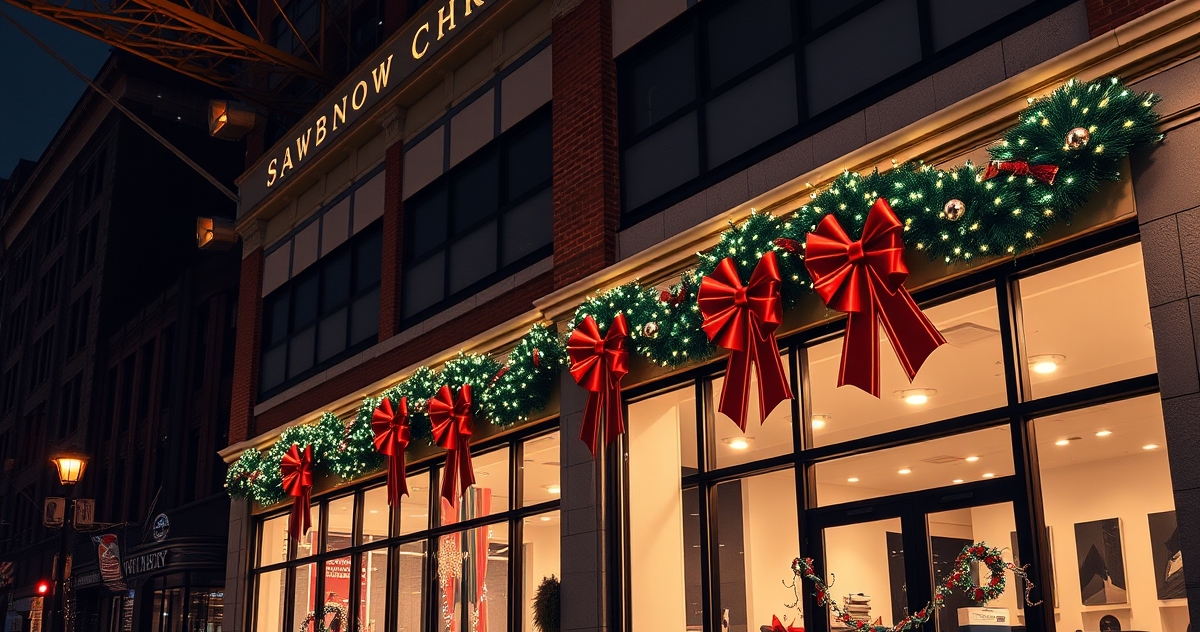
The most effective approach combines three elements: Garlands for structure and greenery, Bows for warmth and visual anchoring, and Mini Lights in warm white for ambient glow at multiple heights.
Ground and mid-level layers: Drape Garlands along the tops of stall dividers, along the bar setup, and around ceremony arches or altar structures. Interweave warm white Mini Lights throughout the greenery so the garland itself becomes a light source rather than just a backdrop. This mid-level lighting keeps the space feeling intimate rather than cavernous.
Entrance and focal accents: Large decorative Bows placed at key anchor points — the main doors, the first and last rafter posts, the head table backdrop — draw attention and create a sense of ceremony within the space. Pair them with looped Mini Light drops or tied garland tails for a cohesive look.
Perimeter definition: Run garland with integrated lighting along the exterior edges of the barn interior — window frames, loft railings, exposed stone walls — to create a warm perimeter that makes the whole space feel curated and complete.
For inspiration on how garland and lighting work together in outdoor and architectural settings, check out our guide on wedding arch garland and lighting for outdoor ceremonies. And if you want to explore how bow placement can anchor a larger decorative scheme, our bow selection guide is a helpful starting resource.
Electrical Capacity Planning for Vintage Barns
Here's where barn wedding lighting gets real for venue owners: the aesthetics don't matter if you blow a circuit during the first dance. Vintage New Hampshire barns were rarely wired with large-scale event lighting in mind, and understanding your electrical infrastructure is non-negotiable before installing a permanent or semi-permanent lighting system.
Most vintage barns were built with minimal electrical capacity — often a single 60- or 100-amp service that's been incrementally updated over the decades. Modern weddings, however, demand power for lighting, a DJ or live band, catering equipment, climate control, and vendor setups simultaneously.
Here's how to approach capacity planning:
- Get a licensed electrician's assessment: Before any event lighting installation, have a licensed NH electrician document your panel capacity, identify existing circuits, and calculate your realistic headroom for additional draw.
- Dedicated lighting circuits: Ideally, your barn's event lighting should run on dedicated circuits separate from catering and audio-visual equipment. This protects your lighting from the voltage fluctuations that AV equipment can cause.
- LED Mini Lights are your best friend: Modern LED Mini Lights in warm white draw a fraction of the wattage of incandescent alternatives. For a venue owner managing power constraints, this is one of the most impactful product decisions you'll make.
- Load calculations per run: A professional installer will calculate total wattage per circuit run before installation, ensuring no single circuit is overloaded. This is something our team handles as part of every commercial installation.
- Backup and failover planning: For high-revenue event venues, consider a backup generator circuit for the lighting system alone. A power issue affecting only the caterer is a problem; a power issue that plunges the ceremony into darkness is a catastrophe.
For a broader look at how NH venue owners and event planners should approach outdoor and indoor event lighting logistics, our outdoor event lighting guide for NH venues covers additional considerations worth reviewing.
Why a Seasonal Lighting Contract Makes More Sense Than Per-Event Booking
If you're a venue owner hosting multiple weddings and events per season, you've probably considered whether to hire lighting help on a per-event basis or establish an ongoing relationship with a professional installer. The answer, in almost every case, is the seasonal contract — and the reasons go beyond simple convenience.
Cost efficiency: A seasonal contract allows pricing to be structured around a predictable scope of work rather than emergency call-out rates. Per-event pricing often includes mobilization costs each time; a contracted relationship eliminates that overhead.
Consistency across bookings: Your couples are booking your venue based on photos and walkthroughs — often taken with your best lighting in place. A seasonal contract ensures that every event looks as good as your marketing materials, not just the ones where you happened to have great help.
Priority scheduling: New Hampshire's event season is compressed, and so is installer availability. Venues with seasonal contracts receive priority scheduling, which matters enormously when you have three weddings in a single August weekend.
Maintenance coverage: Bulbs burn out, anchors loosen, and weather takes a toll on outdoor-to-indoor transition points. A seasonal contract typically includes periodic inspections and maintenance calls, so you're not scrambling to fix a problem the morning of a $15,000 wedding.
Year-round flexibility: Many barn venues operate across multiple seasons — summer weddings, fall foliage events, holiday parties, and winter gatherings. A year-round lighting partner can adapt your installation for each season's aesthetic, adding holiday Garlands and Bows in December and transitioning back to event-neutral warm white setups in spring.
If you're weighing the timing of when to lock in a lighting partner, our post on why booking lighting installation in June makes sense for NH properties explains the seasonal dynamics that drive installer availability.
Choosing the Right Warm White for Your Barn's Character
Not all warm white is the same, and for a barn venue, the specific tone of your lighting has a significant impact on how the space photographs and how guests experience it in person.
Barn interiors — raw wood, aged timber, stone, and weathered metal — tend to absorb light rather than reflect it. This means you'll generally want a slightly warmer color temperature than you might use in a contemporary venue. A color temperature in the 2700K to 3000K range tends to flatter natural materials and skin tones, which matters enormously when half the venue is photographed by a professional photographer for several hours.
Warm white Mini Lights in this temperature range also pair naturally with the organic tones of fresh or faux Garlands, preventing the greenery from looking cool or washed out under harsh lighting. And when Bows in ivory, burlap, or blush are incorporated, warm white complements rather than competes.
Our team can provide warm white Mini Light samples and conduct a walk-through assessment of your barn's reflective properties before any installation commitment. Contact us to schedule a venue consultation.
Frequently Asked Questions
How far in advance should I book professional lighting installation for my barn venue?
For New Hampshire venues, we strongly recommend booking at least 8 to 12 weeks before your target installation date, especially if your event season begins in May or June. Summer and fall are peak periods for both weddings and installer demand. If you're planning a seasonal contract, reaching out in late winter or early spring gives you the most flexibility in design planning and scheduling.
Can Mini Lights be safely installed in older barns with limited wiring?
Yes — in fact, LED Mini Lights are specifically well-suited to vintage barns because of their low wattage draw. A professional installer will assess your electrical panel capacity and design lighting runs that stay well within safe circuit loads. In some cases, we recommend adding a dedicated circuit or circuits before installation, which a licensed NH electrician can handle as part of the project scope.
What's the difference between a per-event lighting rental and a permanent installation?
A per-event rental typically involves portable equipment brought in and removed for each event, which means setup time, breakdown time, and higher per-use costs. A permanent or semi-permanent installation — anchored to your rafters and wired to your electrical system — is set up once and maintained seasonally. For venues hosting more than four or five events per season, a permanent installation almost always offers better economics and a more consistent aesthetic result.
Do Garlands and Bows need to be replaced each season, or can they be reused?
High-quality commercial-grade Garlands and Bows, when stored properly, can be reused across multiple seasons. However, indoor barn environments can expose them to dust, humidity, and insect activity, which affects longevity. Our seasonal contracts include an inspection of all decorative elements at the start of each season, with replacement recommendations based on condition rather than a blanket annual cost.
Can my lighting setup be adapted for both summer weddings and holiday events?
Absolutely. This is one of the strongest arguments for a year-round lighting partnership. The structural anchoring and wiring infrastructure installed for warm white summer wedding lighting can support seasonal overlays — additional Garlands, holiday Bows, C9 accent lighting for exterior use in December — without requiring a full reinstallation. Our team manages this type of seasonal transition for multiple NH venues each year.
Ready to Transform Your Venue?
Barn wedding lighting is one of the most technically and aesthetically demanding applications in the event industry — and it's one of the highest-impact investments a venue owner can make in their property's marketability. From structural load planning to electrical capacity assessment to the layered artistry of warm white Mini Lights, Garlands, and Bows, every detail matters.
Holiday Lights Decor New Hampshire has been serving commercial clients across the state since 2006, with specific experience in barn and agricultural venue installations. Whether you're preparing for your first event season or looking to upgrade an existing lighting setup, our team brings the expertise to make your space exceptional — and keep it that way, event after event.
Explore our commercial lighting services or reach out to schedule a venue consultation. We'd love to help you light the next chapter of your venue's story.