A single perfectly sized, beautifully proportioned bow can be the difference between a front door that stops traffic and one that blends into the neighborhood. Yet bow selection is one of the most overlooked steps in holiday and seasonal decorating. Walk into any craft store in New Hampshire between October and December and you'll find ribbons in every width, material, and color imaginable — and absolutely zero guidance on which one actually holds its shape through a January nor'easter or a breezy June outdoor event on the seacoast.
Whether you're outfitting a single wreath on your front door, draping garlands across a fence line, or decorating for a commercial property, this holiday bow selection guide covers the decisions that matter: wired vs. unwired ribbon, size proportions, color combinations that work across seasons, and whether making your own florist bow is worth the effort. Let's dig in.
Wired vs. Unwired Ribbon: A New Hampshire Reality Check
This is the single most important decision you'll make when selecting bow materials in New Hampshire — and it has nothing to do with aesthetics. It has everything to do with weather.
New Hampshire winters are not gentle. Wind gusts along the seacoast and mountain passes can exceed 40 mph, and wet, heavy snow regularly accumulates on decorations from late November straight through March. An unwired ribbon bow — no matter how beautifully it was tied — will collapse, droop, and flatten within days of installation outdoors. By the time your holiday guests arrive, that gorgeous velvet bow will look like a crumpled paper bag.
Wired ribbon is the only appropriate choice for outdoor decorations in NH. The wire running along each edge of the ribbon allows you to sculpt and re-sculpt each loop, giving the bow structural integrity that holds even when wet. When snow lands on a wired bow, the loops spring back rather than deflating. Look for wired ribbon that's at least 2.5 inches wide for most applications — anything narrower struggles to hold a visible loop shape from a distance.
For indoor applications — a mantle garland, a stair bannister accent, or a centerpiece — unwired ribbon is perfectly fine and often more elegant in appearance. The softer drape of an unwired satin or organza ribbon suits interior décor beautifully. Just don't make the mistake of using it outdoors in New Hampshire.
Material matters too. Avoid standard fabric ribbons outdoors; they absorb moisture and deteriorate quickly. Opt for waterproof or water-resistant poly ribbons, metallic wired ribbons, or outdoor-rated burlap ribbon with wire. These materials maintain color and structural integrity through freeze-thaw cycles and won't mold or fade before the season ends.
Bow Size Proportions: Matching Your Bow to Your Wreath and Garland
Nothing undermines a beautifully assembled wreath faster than a bow that's the wrong size. A tiny bow on a 24-inch wreath looks like an afterthought; an oversized bow on a 12-inch wreath looks comical. Proportion is everything.
Here's a practical proportion guide for pairing bows with wreaths:
- 10–12 inch wreaths: Use ribbon 1.5 inches wide; finished bow width should be 6–8 inches across. These are accent wreaths — think window panels or interior use.
- 16–18 inch wreaths: Use ribbon 2.5 inches wide; finished bow width of 10–12 inches. A solid standard for side doors and interior spaces.
- 20–24 inch wreaths: Use ribbon 2.5–4 inches wide; finished bow width of 12–16 inches. This is your classic front door wreath size — the bow should be prominent and full.
- 26–30 inch wreaths: Use ribbon 4 inches wide minimum; finished bow width of 16–20 inches. Large statement wreaths for double doors, barns, or commercial entryways.
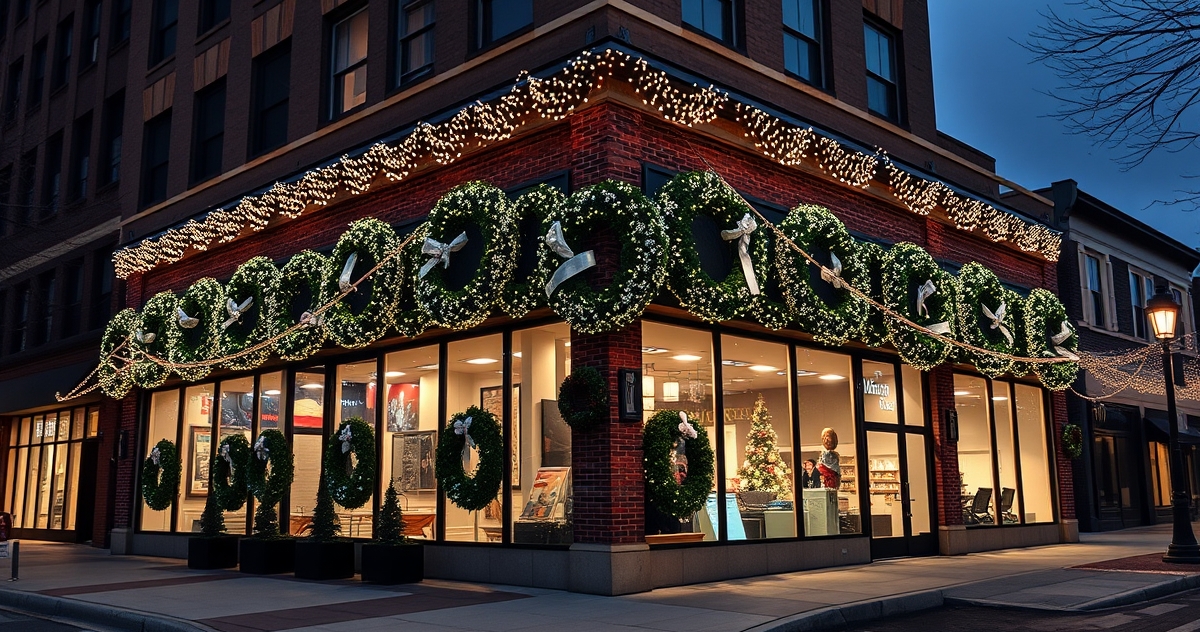
- 36 inch and above: Use ribbon 4–6 inches wide; bow widths of 22–28 inches. These are commercial-scale or municipal wreaths — think town hall, shopping center entrances, or large estate gates.
For garlands, bow placement and sizing follow a different logic. Garlands are linear, so bows function as accent markers rather than centerpieces. A good rule: place bows every 4–6 feet along a fence or railing garland, and size the bow to roughly match the garland's diameter. A 6-inch diameter garland pairs well with an 8–10 inch finished bow. This creates rhythm without overwhelming the garland's own visual texture.
When in doubt, go slightly larger. A bow that's 10% too big reads as intentionally bold. A bow that's 10% too small reads as an oversight.
Color Combinations That Work Year-Round in New Hampshire
One of the smartest investments a New Hampshire homeowner or venue operator can make is choosing bow and decoration colors that serve double duty — looking stunning for the holiday season and transitioning seamlessly into patriotic summer events like Fourth of July, Memorial Day, and town celebrations.
Two color combinations stand out as genuinely versatile:
Red and White: This pairing is a natural bridge between seasons. A red/white bow on a fresh evergreen wreath reads as classic Christmas elegance in December. Replace the evergreen wreath with a grapevine or bleached twig wreath in late June, keep the same red and white bow, add some small American flags, and suddenly you have a patriotic summer display that feels intentional rather than repurposed. Red/white ribbon with metallic silver accents works particularly well for New England coastal homes.
Red and Green: The most iconic holiday pairing, red/green is deeply associated with Christmas — but forest green is also the color of summer foliage and New Hampshire's own landscape. A deep hunter green bow with red accents translates well into summer garden parties and outdoor events when paired with natural elements like ferns, wildflowers, or sunflowers. Commercial properties along tourist corridors often find that green-forward decorations bridge the July 4th weekend through fall foliage season with minimal swaps.
For municipal clients and larger commercial properties, consider maintaining a consistent bow color palette year-round and simply swapping the wreaths and garlands they adorn. This is a cost-effective approach that our team at Holiday Lights Decor regularly recommends to municipal clients across New Hampshire who need to refresh displays multiple times per year.
For homeowners interested in a complete seasonal approach, our residential decoration services include consultation on color palettes that work across multiple seasons — so your investment in quality ribbon and hardware goes further.
Making a Florist Bow vs. Buying Pre-Made: Time and Cost Breakdown
Every year, thousands of New Hampshire homeowners sit down with a spool of wired ribbon and a YouTube tutorial, determined to hand-tie their own florist bows. Some succeed. Many end up with a pile of tangled ribbon and a late-November trip back to the craft store. Here's an honest comparison.
Making a Florist Bow:
- Time investment: Your first attempt will likely take 20–40 minutes per bow. With practice, an experienced decorator can produce a quality florist bow in 5–8 minutes. If you're decorating 8 wreaths and 20 feet of garland, plan for 3–5 hours your first season.
- Material cost: A 25-yard spool of quality wired ribbon costs $15–$30. Each large bow requires approximately 3–4 yards. That works out to roughly $2–$5 in materials per bow — economical if your time is worth less than that.
- Quality ceiling: A skilled hand-tied florist bow is genuinely superior — fuller, more customized, more dimensional than most pre-made options. The ability to match ribbon exactly to your color scheme is a real advantage.
- Consistency challenge: If you need 12 matching bows across a commercial property or a home with multiple entry points, maintaining consistent sizing and loop count is genuinely difficult without a bow-making jig.
Buying Pre-Made Bows:
- Time investment: Essentially zero. Order, receive, attach.
- Cost: Quality pre-made wired bows range from $6–$20 each depending on size and material. For large-scale installations, this adds up quickly.
- Quality consideration: Mass-produced pre-made bows vary enormously in quality. Cheap bows use lightweight wire that fails quickly outdoors. If buying pre-made, invest in commercial-grade bows — they're worth the premium in New Hampshire's climate.
- Best use case: Large installations, commercial properties, time-constrained homeowners, and anyone decorating more than 6–8 locations.
Our honest recommendation: if you're decorating 1–3 wreaths and enjoy the craft, learn to tie your own — it's rewarding and produces beautiful results. If you're outfitting a full home, commercial property, or event venue, pre-made commercial bows (or professional installation) will save you significant time and produce more consistent results. You can explore our full range of decoration options on our products page.
Bow Hardware and Attachment: Don't Skip This Step
Even the most perfectly sized, beautifully tied bow will fail if it isn't attached correctly. This is especially true for New Hampshire outdoor installations where wind and ice load create real stress on attachment points.
For wreaths hung on doors and walls, use a sturdy wreath hanger or floral wire twisted tightly through the wreath frame and secured to the bow's center knot. Never rely on the bow's own ribbon tails to bear the weight — they'll stretch and slip.
For garland bows, use pre-cut floral wire or UV-resistant zip ties to secure the bow's center loop directly to the garland's frame wire or branch structure. For extended outdoor runs, check attachment points after the first major wind event and re-tighten as needed.
For commercial-scale installations or any property where a falling decoration could pose a safety concern, professional installation is strongly recommended. Our team has been safely installing holiday and seasonal decorations across New Hampshire since 2006 — we know exactly which attachment methods hold through a Concord ice storm and which ones fail by Christmas morning.
Want to see how bows and garlands come together in a full display? Browse our gallery for inspiration from recent residential and commercial installations across New Hampshire.
Frequently Asked Questions
What is the best ribbon material for outdoor bows in New Hampshire?
For New Hampshire's outdoor conditions, wired poly or metallic ribbon is your best choice. It's water-resistant, holds shape in wind and snow, and doesn't mold or fade through a full winter season. Avoid fabric-only or velvet ribbons outdoors — they absorb moisture and deteriorate quickly. If aesthetics are important, look for outdoor-rated ribbons with velvet-like finishes that mimic the look without the vulnerability.
How many loops should a proper florist bow have?
A full, professional-looking florist bow typically has 6–10 loops depending on size and application. For large wreaths (24 inches and above), aim for 8–10 loops using 4-inch ribbon to create a lush, dimensional look. For smaller wreaths or garland accents, 6 loops in a 2.5-inch ribbon is proportionate and clean. The key is consistency — every loop should be roughly the same size for a polished appearance.
Can I use the same bows for Christmas and Fourth of July decorations?
Absolutely — and it's one of the smartest investments you can make. Red/white and red/green color combinations work beautifully across both seasons. A red and white wired ribbon bow is equally at home on a Christmas wreath in December and a patriotic grapevine wreath in July. Investing in quality bows that serve multiple seasons significantly reduces your year-over-year decoration costs.
How do I keep my bow from drooping after rain or snow?
Start with wired ribbon — that's 90% of the solution. After any significant precipitation event, simply re-sculpt the loops by hand; wired ribbon allows you to reshape the bow back to its original form in under a minute. If your bow is flattening despite being wired, the wire gauge may be too light for the ribbon width. Heavier, wider ribbon requires heavier-gauge wire to maintain loop shape under wet conditions.
Is it worth hiring a professional to install bows and wreaths, or can I do it myself?
For 1–4 entry points, DIY installation is very manageable with quality materials and the right attachment hardware. For larger homes with multiple windows, extended garland runs, roofline decorations, or commercial properties, professional installation pays for itself in time saved, consistent results, and safer attachment methods — especially at height. Holiday Lights Decor New Hampshire has been helping homeowners and businesses across the state since 2006. Call us at (603) 509-1155 or request a quote to discuss your project.
Bows are one of those decoration elements that seem simple on the surface but reward thoughtful selection with genuinely stunning results. The right size, the right ribbon, the right attachment — these details add up to a display that looks intentional, professional, and built to last through everything a New Hampshire winter can throw at it. If you'd like expert guidance on bow selection, wreath sizing, or a full seasonal decoration plan for your home or business, our team at Holiday Lights Decor New Hampshire is here to help. Reach out at (603) 509-1155 or contact us online — we'd love to make your next holiday display the best one yet.