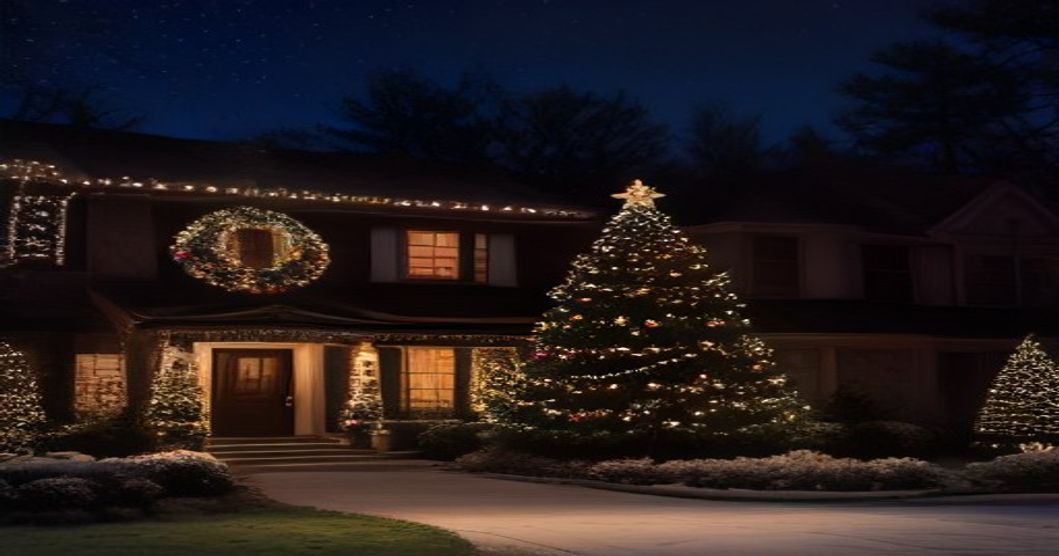
Picture driving down a snow-dusted street in Portsmouth or Concord on a December evening, and there it is — a massive oak or maple absolutely glowing with thousands of lights, every branch illuminated with the kind of precision that makes you slow the car down just to stare. That's not magic. That's professional tree wrapping done right, and there's far more science behind it than most homeowners realize.
New Hampshire trees are beautiful, but they're also big, complex, and at the mercy of some genuinely brutal winter weather. Wind gusts off Lake Winnipesaukee, ice storms in the White Mountains foothills, and weeks of freeze-thaw cycles can turn a poorly installed light display into a tangled, flickering mess by mid-December. That's why understanding professional tree wrapping techniques — the real ones, not the throw-a-strand-and-hope approach — matters so much here in the Granite State.
Whether you're a homeowner curious about what goes into a professional installation or you're considering hiring a crew for the first time, this guide walks you through exactly how the pros do it. At Holiday Lights Decor New Hampshire, we've been wrapping trees across the state since 2006, and we're happy to pull back the curtain.
Start at the Base: The Trunk-Up Wrapping Technique
The single biggest mistake DIY decorators make is starting at the tips of branches and working inward. Professionals always start at the base — specifically at the root flare where the trunk meets the ground — and work upward. This trunk-up method accomplishes several things at once.
First, it creates a visual anchor. When warm white Mini Lights spiral tightly from the base of the trunk upward, the eye naturally follows the light upward into the canopy, creating a sense of height and drama that top-down installation simply can't replicate. Second, it gives the installer a logical wiring plan. Power sources are almost always at ground level, so running your primary strand from the outlet up the trunk means fewer extension cords snaking across your lawn and a cleaner, safer setup overall.
Here's the professional trunk-wrapping sequence our teams follow on every job:
- Step 1 — Assess and plan: Walk around the tree and identify primary scaffolding branches, the natural flow of the canopy, and any dead or weak limbs that shouldn't bear strand weight.
- Step 2 — Anchor the base strand: Secure the first loop of lights at the root flare using a professional-grade clip or zip tie rated for outdoor use. This anchor point is critical — if it slips, the entire trunk wrap can unravel.
- Step 3 — Spiral with consistent pitch: Wrap upward in a tight, consistent spiral. For trunks under 12 inches in diameter, aim for roughly 2–3 inches between each spiral loop. For large maples or oaks, 4–5 inches is acceptable while still providing full visual coverage.
- Step 4 — Transition to primary branches: At each major branch junction, split strands intentionally. Don't simply keep spiraling past the junction — follow each branch outward with its own dedicated wrap.
- Step 5 — Work from thick to thin: On each branch, begin wrapping at the thickest point near the trunk and spiral outward toward the tip, slightly loosening your pitch as the branch tapers.
For residential installations, this methodical approach transforms even a modest front-yard tree into a focal point neighbors will photograph all season long.
How Many Lights Per Foot of Branch Diameter
One of the most common questions we hear is: how many lights do I actually need? The professional answer is calculated by branch diameter, not by tree height alone. Here's the rule of thumb our installation teams use in the field:
- Trunk and major limbs (4+ inches diameter): Plan for approximately 150–200 Mini Lights per linear foot of wrap coverage. These thick sections need density to look full rather than sparse.
- Secondary branches (2–4 inches diameter): 100–150 Mini Lights per linear foot works well here. You're still building visual mass in the middle canopy.
- Tertiary/tip branches (under 2 inches diameter): 75–100 Mini Lights per linear foot. These outer branches are where the canopy gets its sparkle and depth, but over-weighting them can cause drooping.
As a practical example, a mature 30-foot sugar maple with a 24-inch trunk diameter and a wide spreading canopy might require anywhere from 3,000 to 5,000 individual Mini Light bulbs for full professional coverage. That number surprises most homeowners — and it's exactly why professional-grade planning matters before you ever open a single box.
For statement trees where you want maximum visual impact, warm white Mini Lights deliver a timeless, elegant glow that reads beautifully against fresh New Hampshire snow. For family-friendly displays or commercial properties looking for festive energy, multicolor Mini Lights add playful character across every branch.
C9 Bulbs for Statement Trees vs. Mini Lights for Delicate Ornamentals
Not every tree calls for the same light. This is where professional judgment — the kind built over nearly two decades of New Hampshire installations — makes a real difference in your final display.
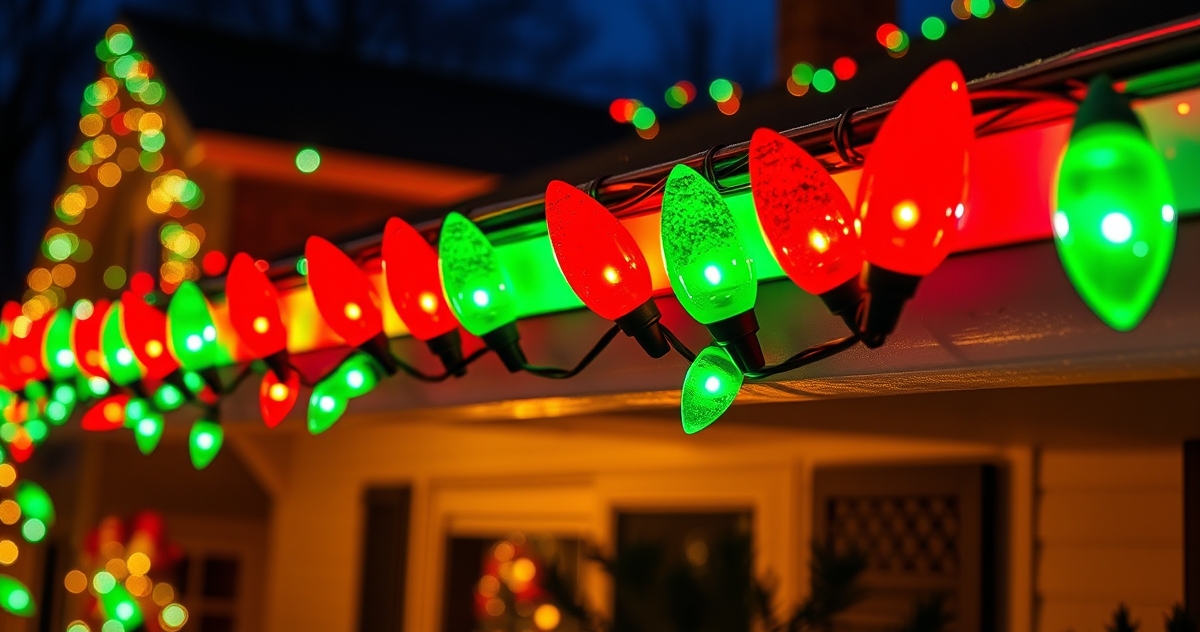
C9 bulbs are the large, faceted commercial-grade bulbs you see outlining rooflines and making bold statements from the street. They're powerful, highly visible, and absolutely stunning when used on large-canopy trees with strong structural branches. A century-old white oak or a towering white pine wrapped with warm white C9 bulbs becomes a landmark. The bulbs' size means you need fewer of them for coverage, and their brightness cuts through foggy or stormy New Hampshire evenings when smaller lights might look dim.
However, C9 bulbs are not appropriate for every tree. Delicate ornamentals — Japanese maples, weeping cherries, birch clusters, or any tree with fine, flexible branch tips — need the gentler touch of Mini Lights. The lighter weight prevents branch stress, and the smaller bulb scale stays proportional to the tree's fine texture. A Japanese maple draped in multicolor Mini Lights looks like something out of a storybook. That same tree wrapped in C9 bulbs would look mismatched and could actually cause physical damage to fragile branch tips under the added weight of ice or snow accumulation.
Our professional services always include a tree assessment before we recommend a light type. We evaluate trunk diameter, branch structure, proximity to the street, ambient light levels, and the visual context of your property before suggesting a product. It's the kind of detail that separates a polished professional display from a DIY attempt that looks fine in photos but falls apart in person.
A few reliable pairings our teams use regularly across New Hampshire:
- Large oak or maple + warm white C9 bulbs: Classic, dramatic, high-visibility street presence.
- Birch grove + warm white Mini Lights: Ethereal and romantic, especially when light reflects off white bark.
- Spruce or fir + multicolor Mini Lights: Festive and full, maximizing the dense branch structure of evergreens.
- Weeping cherry or Japanese maple + warm white Mini Lights: Delicate and elegant, preserving the tree's natural sculptural quality.
Why New Hampshire Weather Demands Secure Fastening Methods
Here's the hard truth about holiday lighting in New Hampshire: the weather will test every installation you put up. Ice storms in January can add half an inch of ice to every exposed surface. Nor'easters bring sustained winds of 40–50 mph. And the freeze-thaw cycle — where temperatures swing from 15°F overnight to 45°F by afternoon — causes materials to contract and expand repeatedly, loosening clips, stressing wire insulation, and pulling strands free from their anchor points.
Professional installers account for all of this before they ever touch a strand. Here's how the pros secure tree wraps to survive a full New Hampshire winter:
- Rated outdoor clips only: No staples, no tape, no twist ties from the kitchen drawer. Professional crews use UV-stabilized nylon clips or stainless wire ties rated for outdoor use in sub-zero temperatures. These maintain their grip even when plastic becomes brittle in deep cold.
- Slack management: Strands wrapped too tightly will snap wire connections as branches flex in the wind. Professionals leave a controlled amount of slack at each branch junction so the strand can move with the branch without breaking the connection.
- Waterproof connection points: Every strand connection — especially where strands join at branch junctions — should be sealed with weatherproof electrical tape or housed in a protective connector cap. Exposed connections are where ice infiltration causes short circuits and outages.
- GFCI-protected circuits: All outdoor light installations should run through ground fault circuit interrupter outlets. In New Hampshire's wet winter conditions, this isn't optional — it's the difference between a tripped breaker and a serious electrical hazard.
- Periodic tension checks: Professional installations include mid-season check-ins. As ice loads accumulate and then melt, tension on strands changes. A brief inspection in January can prevent a major strand failure that leaves your tree dark by Valentine's Day.
If you're interested in understanding how our team has helped properties across New Hampshire build displays that last the entire season, take a look at our post on the best Christmas light installation approaches for 2026 — it covers several of these weatherproofing principles in the context of full-property designs.
Common Tree Wrapping Mistakes (And How Professionals Avoid Them)
Even experienced DIY decorators fall into predictable patterns that professionals learn to avoid. Here are the most common tree wrapping errors we see across New Hampshire — and the professional fix for each:
- Mistake: Using indoor-rated lights outdoors. Fix: Always check the UL rating on the packaging. Outdoor-rated strands have thicker insulation and sealed connections designed for moisture exposure.
- Mistake: Daisy-chaining too many strands. Fix: Professional installations calculate total wattage loads carefully. Overloaded circuits trip breakers, create fire risk, and burn out bulbs prematurely. Know your circuit's amperage before you begin.
- Mistake: Wrapping dead or compromised branches. Fix: Always inspect for dead wood before installing. Ice-loaded lights on a structurally weak branch create a falling hazard. Remove or avoid dead limbs entirely.
- Mistake: Ignoring the natural shape of the tree. Fix: Professionals enhance a tree's natural form rather than fight it. Wrapping should follow branch flow, not impose a rigid pattern that looks unnatural from any angle.
- Mistake: No plan for removal. Fix: Professional strands are installed with removal in mind — organized wraps with accessible anchor points mean clean, damage-free takedown in January or February.
We've also answered many of these practical questions in detail over on our post covering the top holiday and event lighting questions from NH homeowners — worth a read if you're planning a new installation this season.
Frequently Asked Questions
How far in advance should I schedule professional tree wrapping in New Hampshire?
We recommend booking your installation by late October or early November at the latest. New Hampshire's season is short, and our installation calendar fills quickly once November arrives. Early scheduling also means your display goes up before the first hard freeze, which makes installation easier and safer for the crew. Contact us at (603) 509-1155 to get on the schedule.
Can I leave lights wrapped on my trees all winter, or do they need to come down sooner?
Professionally installed outdoor-rated lights can safely remain on trees through the entire New Hampshire winter season. We typically schedule removal in late January or February. Leaving lights in place through spring bud break is not recommended, as new growth can grow around strands and create removal complications. Our team handles both installation and post-season removal as part of our full-service packages.
Are C9 bulbs safe for trees near power lines or high-wind areas?
C9 bulbs are heavier than Mini Lights and require careful consideration in high-wind exposures or near utility lines. Our installation teams assess each site individually before recommending a product. In very exposed locations, we may recommend Mini Lights even on large-canopy trees, or use specific wind-rated fastening methods to keep C9 strand installations secure and safe throughout the season.
How much does professional tree wrapping cost in New Hampshire?
Pricing varies based on tree size, light type (Mini Lights vs. C9 bulbs), and the number of trees in your project. A single medium-sized residential tree typically starts in the several-hundred-dollar range when you factor in professional-grade lighting product, installation labor, and end-of-season removal. We offer free site assessments and detailed quotes — reach out at (603) 509-1155 or visit our online quote request page to get started.
Do professionals use warm white or multicolor lights more often for tree wrapping in NH?
Both are popular, and the choice really comes down to the property's aesthetic and the client's personal preference. Warm white tends to dominate in higher-end residential neighborhoods and commercial properties where an elegant, cohesive look is the goal. Multicolor is a perennial favorite for family homes, municipal displays, and anywhere the goal is festive, playful energy. We're happy to show you examples from our project gallery to help you decide what feels right for your property.
Ready to Transform Your New Hampshire Trees This Holiday Season?
Tree wrapping is one of those things that looks simple until you're standing at the base of a 40-foot maple in 28-degree weather trying to figure out why your third strand just blew a fuse. The trunk-up technique, proper light quantity calculations, smart product selection, and weatherproof fastening methods all take time to master — and in New Hampshire, the weather doesn't give you a second chance once a bad storm rolls through.
That's exactly why homeowners, commercial property managers, and municipalities across New Hampshire have trusted Holiday Lights Decor New Hampshire since 2006. Our professional installation teams bring the planning, the product knowledge, the equipment, and the experience to make your tree wrapping display look spectacular from the first light-up through the final flurries of February. Explore our residential services to learn more about what a full-service installation looks like, or give us a call at (603) 509-1155 to talk through your project today.