Key Takeaways
- Classic holiday lighting leans on large multicolor C9 bulbs, evergreen garlands, and oversized bows — a look rooted in mid-century New England tradition that pops on colonial and cape-style homes.
- Modern holiday lighting favors cool white or warm white mini lights, clean symmetrical lines, frosted bulbs, and minimalist accents that complement contemporary and craftsman architecture across NH.
- NH's colonial and cape-style homes are naturally versatile — their symmetrical facades work beautifully with both aesthetics when placement is intentional.
- Mixing elements (classic roofline C9s with modern mini-light windows, for example) is a popular and effective middle-ground strategy.
- Professional installation ensures both styles look polished through New Hampshire's ice, wind, and heavy snow conditions — and protects your investment season after season.
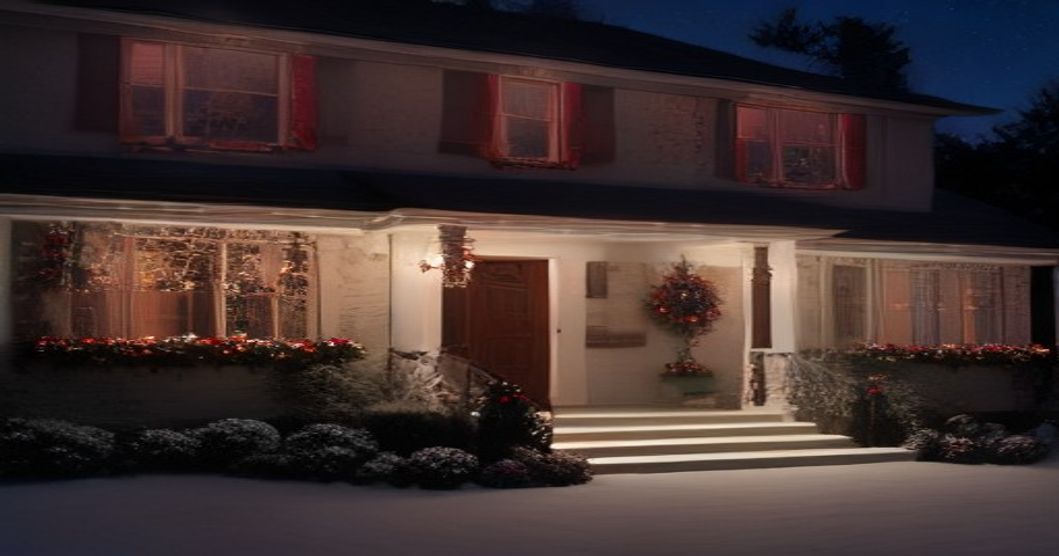
Picture two homes side by side on a snowy New Hampshire street in December. The first glows with big, bold multicolor C9 bulbs marching along every roofline, fat evergreen garland looping across the porch rails, and a pair of oversized red bows flanking the front door — pure 1950s New England nostalgia made electric. The second is quieter but striking: cool white mini lights trace every architectural edge with mathematical precision, frosted bulbs shimmer from matched window wreaths, and not a single wire is visible. Both homes stop traffic. Both are unmistakably festive. But which one is right for your house? The answer depends on your architecture, your neighborhood, and honestly, your personality — and this guide will walk you through every factor.
What Defines Classic Holiday Lighting Style?
Classic holiday lighting is defined by large-format bulbs, saturated colors, and layered decorative elements that mirror the way New England homes were decorated from the 1940s through the 1980s. The anchor of this style is the C9 bulb — a roughly 1.5-inch faceted or smooth bulb that throws a wide, warm glow visible from well down the street. Strung in multicolor sequences (red, green, blue, yellow, orange) along rooflines, gutters, and porch overhangs, C9s create the unmistakable "candy cane house" silhouette that generations of NH residents associate with a real Christmas.
For a deeper dive into bulb specs, spacing, and base types, see our complete C9 bulb guide for NH homeowners.
Signature Elements of the Classic Look
- Multicolor C9 bulbs on rooflines, ridge peaks, and dormers — typically spaced 12 inches apart for a full, continuous glow
- Evergreen garland draped along porch rails, columns, and stair banisters, often accented with warm white mini lights woven inside
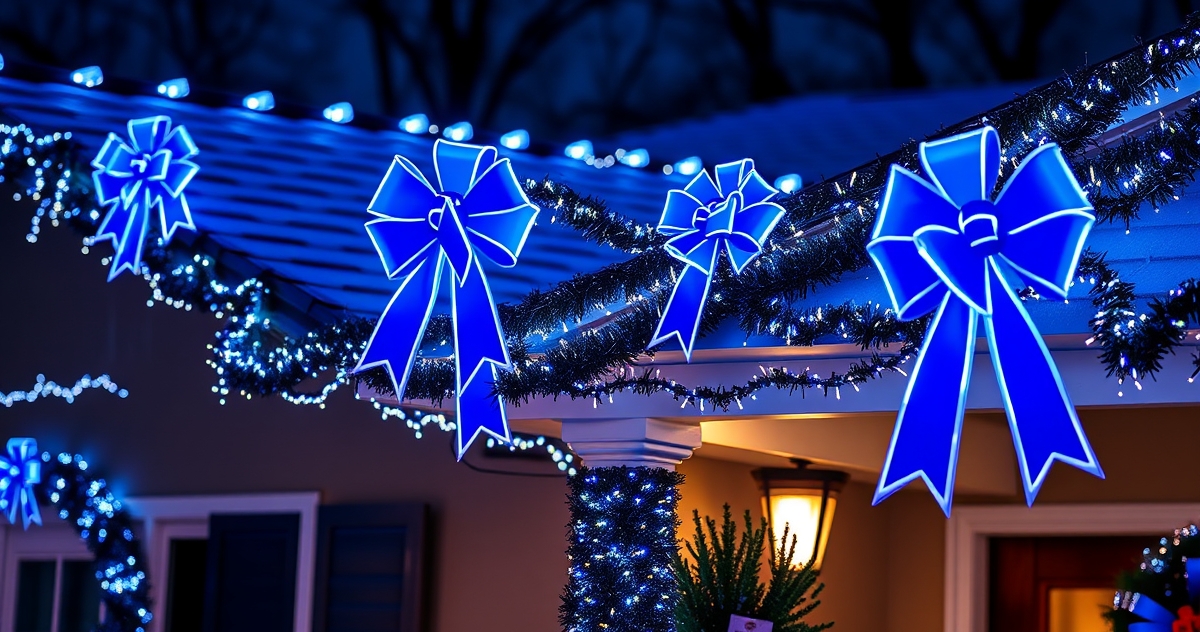
- Oversized fabric bows — 24- to 36-inch bows in red, plaid, or burgundy velvet — anchored to columns, lamp posts, and door surrounds
- Full wreath with pinecones, berries, and a matching bow centered on every visible door and window
- Warm white or multicolor icicle lights cascading from eaves for added dimension
The classic style has deep roots in New Hampshire's decorating history. To understand how it evolved from Edison-era string lights into the C9 tradition, our post on the history of string lights from Edison to LED covers the full arc. And if you want to explore bow choices in detail, our bow selection guide breaks down materials, sizes, and weather resistance for outdoor NH conditions.
What Defines Modern Holiday Lighting Style?
Modern holiday lighting is defined by restraint, precision, and a cooler color palette — typically cool white or warm white mini lights deployed with architectural intentionality rather than layered abundance. Where classic style fills every surface, modern style uses negative space as a design tool. A single, perfectly proportioned wreath per window. Roofline lighting that follows only the primary ridge and gutter edge — no dormers, no columns. Every wire hidden. Every bulb the same size and color temperature.
Signature Elements of the Modern Look
- Cool white or warm white mini lights (M5 or G12 LED bulbs) running in perfectly straight, evenly tensioned lines along gutters and primary rooflines
- Frosted or faceted LED bulbs in monochromatic white that diffuse light softly rather than casting sharp points
- Matched wreaths with minimal decoration — think simple white ribbon bows or no bow at all — centered symmetrically in every front-facing window
- Lit garland on the door surround only, kept tight and architectural rather than looped and full
- Pathway lighting in warm white to frame the approach to the front door without visual clutter
Mini lights are the workhorse of the modern aesthetic. For spacing recommendations, wattage considerations, and style variations, our complete mini lights guide is an excellent companion resource. For window-specific placement strategies that boost curb appeal, see our post on window display lighting for NH homes.
How NH Architecture Pairs with Each Style
New Hampshire's residential housing stock skews heavily toward colonial, cape cod, garrison, and saltbox forms — all characterized by symmetrical facades, steep pitched roofs, and prominent front entries. This symmetry is genuinely good news: it makes both classic and modern lighting styles workable, but each pairs better with certain sub-styles.
Colonial and Garrison Homes
The two-story colonial's flat, wide front face and evenly spaced windows are practically a canvas for either approach. Classic multicolor C9s along the full roofline and each window hood look proportionally correct because the home's scale is large enough to carry the weight. Modern cool-white mini lights work equally well — the symmetrical window grid means matched wreaths line up perfectly, and a single clean roofline run looks intentional rather than sparse.
Cape Cod Homes
The cape's lower profile and steeply pitched roof make roofline lighting a focal point. Classic C9s on the main ridge and eave line read as bold and cheerful — the compact scale means even 40–50 feet of multicolor lights makes a significant visual statement. Modern style works beautifully on capes too, but requires discipline: stick to the primary roofline only and let matched window wreaths do the supporting work. Avoid lighting the shed dormers with mini lights unless the spacing can be made perfectly even.
Contemporary and Craftsman Homes
Newer NH construction — including craftsman bungalows and contemporary colonials — often features mixed materials, horizontal lines, and larger window expanses. These homes are better candidates for modern lighting. The strong horizontal emphasis pairs naturally with clean roofline mini-light runs, and the larger windows accommodate oversized wreaths (24–30 inches) without looking cluttered.
| Home Style | Best Classic Elements | Best Modern Elements | Color Recommendation |
|---|---|---|---|
| Colonial / Garrison | Full C9 roofline + porch garland + bows | Mini-light roofline + matched window wreaths | Multicolor or warm white |
| Cape Cod | C9s on main ridge + icicle eaves | Single ridge mini lights + simple wreaths | Multicolor or cool white |
| Saltbox / Antique | C9s + heavy garland + oversized bows | Warm white only, minimal accents | Warm white or multicolor |
| Craftsman / Contemporary | Selective C9 accents on entry only | Full mini-light lines + frosted bulbs | Cool white or warm white |
| Ranch | C9 roofline + shrub wrapping | Low-profile mini lights + pathway lighting | Warm white or multicolor |
The Case for Mixing Classic and Modern Elements
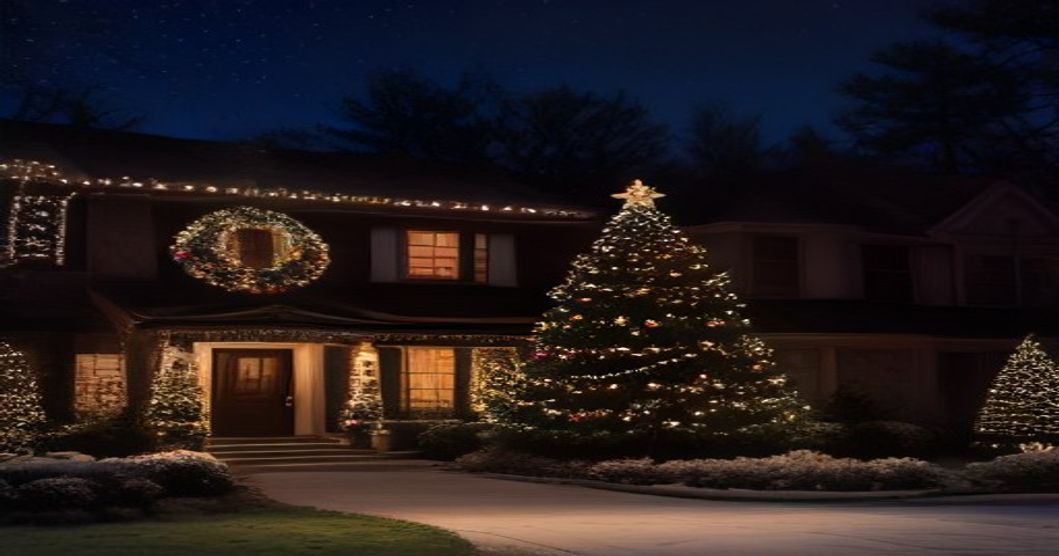
The most visually sophisticated NH holiday displays often blend both traditions intentionally — using classic elements where boldness serves and modern restraint where precision counts. A well-executed hybrid display might pair multicolor C9 bulbs on the main roofline (classic, high-impact) with cool white mini lights woven into window wreaths (modern, refined) and a single oversized bow on the front door (classic accent, modern placement discipline).
This approach lets homeowners honor the festive, warm spirit of New England holiday tradition without surrendering the clean architectural lines that make a home look well-considered. It's also a practical strategy: C9 bulbs on rooflines handle NH's wind and ice load better than delicate mini-light strands, while mini lights give you more flexibility for detailed work on shrubs, trees, and window surrounds.
Speaking of shrubs and landscape elements, our NH bush and shrub lighting guide covers how to extend your display to foundation plantings in both classic and modern styles. And for roofline-specific installation details — including how professionals handle New Hampshire's ice dam zones — see our roofline lighting installation overview.
Durability and Practical Considerations for NH Winters
Choosing a lighting style is only half the equation. New Hampshire winters are genuinely demanding — Concord averages over 60 inches of snow annually, wind chills regularly drop below 0°F, and ice dams are a real risk on any roof with insufficient attic insulation. Your light choices need to survive from Thanksgiving through mid-January without fading, shorting, or pulling gutters off the fascia.
Classic C9 Bulbs in NH Weather
Modern LED C9 bulbs are exceptionally weather-hardy. They run cool (reducing ice-melt drip issues), consume roughly 80% less energy than incandescent equivalents, and the heavier gauge wire used in C9 strands holds up against snow loading better than lightweight mini-light wire. Clip spacing of every 12 inches on gutter runs prevents sag and maintains the clean line even after a significant storm.
Modern Mini Lights in NH Weather
LED mini lights are equally cold-tolerant, but their lightweight wire requires more frequent clip points — every 6–8 inches on exposed roofline runs — to prevent wind-driven movement that creates uneven spacing. Frosted LED mini lights also hold their appearance better than clear-lens versions in heavy snow, because snow accumulation on the bulb diffuses rather than blocks the light output.
Regardless of style, professional installation matters enormously in New Hampshire. Improperly secured lights are a liability in our climate — both for your home's structure and for the safety of anyone walking below. Our residential holiday lighting services include weatherproof installation with commercial-grade clips and strain-relief connections rated for our specific temperature range.
Planning Your Display: Timeline and Next Steps
Whether you choose classic, modern, or a thoughtful blend, the single biggest factor in display quality is planning lead time. NH's most sought-after installation slots — particularly the two weekends before Thanksgiving — fill up as early as July and August. Getting on the calendar early also gives you time to refine your design, source specialty items like extra-large wreaths or custom-colored bows, and make architectural decisions (like whether to add pathway lighting) without rushing.
Our posts on why to book in June and August early-bird booking in New Hampshire explain the seasonal demand curve in detail. For commercial properties considering a statement display this season, our guide to commercial storefront holiday lighting in NH covers scale, code compliance, and brand-aligned color strategies.
When you're ready to lock in your design and schedule, explore our full range of services — from permanent lighting systems to seasonal removal and storage — or jump straight to requesting your free estimate.
Frequently Asked Questions
What is the difference between classic and modern Christmas light styles for New Hampshire homes?
Classic Christmas light styles for NH homes use large multicolor C9 bulbs along rooflines, full evergreen garlands, and oversized bows to create a bold, layered display rooted in mid-century New England tradition. Modern styles use cool white or warm white mini lights in precise, symmetrical runs with minimal decorative accents — prioritizing architectural line and clean visual restraint. The key distinction is abundance versus precision: classic fills every surface with warm, festive color, while modern uses selective placement to highlight the home's structure.
Which holiday lighting style works best on a New Hampshire colonial or cape-style home?
Both styles work well on NH colonial and cape-style homes because of their naturally symmetrical facades. Colonial homes are large enough to carry the visual weight of full classic C9 roofline displays, but their evenly spaced windows also make matched modern wreaths look polished and intentional. Cape-style homes pair beautifully with classic C9s on the steep main ridge, while the lower profile also suits a restrained modern approach — one clean roofline run of cool white mini lights plus simple window wreaths creates a striking silhouette without overcrowding the smaller facade.
Are C9 bulbs or mini lights more durable in New Hampshire winters?
Both LED C9 bulbs and LED mini lights perform well in New Hampshire's cold winters, but C9 strands use heavier-gauge wire that holds up better under snow loading on exposed roofline runs. C9s are typically clipped every 12 inches, which provides good support. Mini lights require more frequent clipping — every 6 to 8 inches — to prevent wind-driven movement and sagging. For maximum durability in either style, LED technology is strongly preferred over incandescent: LEDs run cool, resist freezing temperatures better, and consume significantly less power across a long display season.
Can I mix classic and modern holiday lighting elements on the same home?
Yes — and many of the most visually impressive NH holiday displays do exactly that. A common and effective hybrid approach uses classic multicolor C9 bulbs on the primary roofline for bold, street-visible impact, then transitions to cool white or warm white mini lights for window wreaths, garland, and landscape elements where fine detail matters. An oversized classic bow on the front door anchors the entry while modern symmetry in window placement keeps the overall look from feeling cluttered. The key is making deliberate choices rather than mixing styles arbitrarily.
How early should I book holiday light installation in New Hampshire?
For the best installation slots in New Hampshire — particularly the weekends before Thanksgiving — booking in June or July is strongly recommended. Demand for professional installation increases every year, and late-season bookings (October and beyond) often mean limited scheduling flexibility, rushed installs, or waitlists. Booking early also gives you time to finalize your design, order specialty items like custom wreaths or large bows, and ensure your electrical circuits can support your planned display without overload issues.
What light colors work best for a modern holiday display in NH?
Cool white is the signature color of modern holiday lighting — its crisp, blue-toned glow creates clean contrast against dark NH winter skies and reads as sophisticated rather than festive. Warm white is a softer modern alternative that bridges the gap between contemporary and classic aesthetics, pairing particularly well with natural wood trim, stone facades, and craftsman detailing common in newer NH construction. For a truly monochromatic modern look, frosted LED bulbs in cool white eliminate harsh light-point glare and produce a diffused, even glow that photographs beautifully and looks refined from the street.
Ready to choose your style and get your NH home display on the calendar? Contact us today for a free estimate — our team will assess your home's architecture, discuss your style preferences, and design a display that looks spectacular from Thanksgiving through the New Year.