The first frost arrives quietly in New Hampshire — sometimes as early as late September in the North Country — and by the time November rolls around, your walkway can go from a welcoming path to a shadowy, icy hazard in a matter of weeks. The difference between a home that feels warm and inviting and one that feels dark and uninviting often comes down to one overlooked detail: pathway lighting. Done right, it's not just about safety. It's about creating that magical first impression the moment a guest steps out of their car.
Whether you're decorating for the holiday season or looking to enhance your home's year-round curb appeal, this guide walks you through everything you need to know about pathway lighting for New Hampshire homes — from stake spacing and light height to color temperature and weatherproofing connections that can survive a March nor'easter.
Why Pathway Lighting Matters More in New Hampshire
New Hampshire homeowners face a unique set of challenges that most lighting guides don't address. Our winters are long, our evenings get dark early (sunset can be as early as 4:10 PM in December), and our weather swings between freezing rain, heavy snow, and the occasional mid-winter thaw that creates standing water around ground-level fixtures. That's before we even talk about the aesthetic side.
Practically speaking, a well-lit pathway reduces the risk of slips and falls on ice-covered walkways — a genuine safety concern when guests are arriving for holiday gatherings. Aesthetically, pathway lighting frames your home, draws the eye from the street, and creates a sense of depth and dimension that flat overhead lighting simply cannot achieve.
For our residential clients across New Hampshire, we've seen firsthand how a simple upgrade to pathway lighting transforms a home's entire exterior presentation — especially when it's coordinated with roofline and porch lighting for a cohesive look.
Spacing Stakes Every 6–8 Feet for Even Illumination
One of the most common mistakes homeowners make is either spacing pathway lights too far apart — leaving dark gaps that defeat the purpose — or clustering them too closely, which creates an uneven, cluttered look. The sweet spot for most residential walkways in New Hampshire is every 6 to 8 feet, staggered on alternating sides of the path for the most natural, even illumination.
Here's a practical rule of thumb: stand at the start of your walkway after dark and look toward your front door. Every section of the path should be gently illuminated. If you notice pools of shadow between lights, your spacing is too wide. If the fixtures look like runway lights at Manchester-Boston Regional Airport, pull a few out and increase the gap.
- Short walkways (under 20 feet): 3–4 stakes on alternating sides is typically sufficient.
- Medium walkways (20–40 feet): Plan for 6–8 stakes, spaced every 6–7 feet.
- Long driveways or garden paths: Increase to every 8 feet and consider slightly brighter Mini Lights to maintain consistent visibility across the full length.
When using Mini Lights on pathway stakes, warm white varieties cast a soft, amber-tinted glow that feels natural and welcoming — ideal for traditional colonial and cape-style homes common throughout the Lakes Region and Seacoast areas. Cool white Mini Lights offer a crisper, more modern look that pairs beautifully with contemporary architecture or homes with blue and silver holiday décor themes.
Ground-Level vs. Elevated Pathway Lights: Safety Tradeoffs
Not all pathway lighting is created equal, and the height at which you place your lights has real safety implications — especially during New Hampshire's snow and ice season.
Ground-level lights (flush or near-flush with the ground) offer the most discreet look and work beautifully in landscaped beds. However, they come with notable drawbacks in our climate:
- They can be buried under several inches of snow after a storm, rendering them completely invisible.
- Snowplow operators and shoveling can damage or dislodge them easily.
- Standing meltwater and ice can compromise connections more quickly than elevated fixtures.
Elevated pathway stakes — typically 12 to 18 inches tall — keep your lights visible above a moderate snowfall and are far less likely to be damaged by snow removal. For most New Hampshire homeowners, elevated stakes are the practical choice from October through April. They also cast light at an angle that illuminates more of the walking surface, which directly improves safety on icy nights.
A hybrid approach works well for homes that want year-round appeal: use elevated stakes along your primary walkway (the path guests use) and reserve lower, decorative ground fixtures for garden beds and secondary paths that are cleared less frequently.
For a deeper look at how outdoor lighting choices affect your home's overall safety and aesthetics through the seasons, check out our post on roofline lighting installation in New Hampshire — many of the same principles apply when thinking about your lighting as a unified system.
Matching Pathway Light Color Temperature to Porch and Roofline Lights
Here's a detail that separates a professionally designed lighting installation from a DIY job that just doesn't look quite right: color temperature consistency. When your pathway lights are warm white but your porch fixtures are cool white and your roofline C9 bulbs are a pure icy white, the overall effect feels disjointed — even if each element looks fine on its own.
The goal is cohesion. Think of your home's exterior lighting as a single visual composition, and your pathway lights as the introduction to that composition.
- Warm white pathway Mini Lights pair beautifully with warm white porch sconces, warm white C9 roofline bulbs, and classic greenery like garlands and wreaths with natural twig accents. This palette is timeless and works especially well with brick, wood, and stone exterior finishes.
- Cool white pathway Mini Lights complement cool white or pure white roofline lighting and give a more contemporary, elegant feel. They're a popular choice for homes with white or gray siding, and they photograph beautifully against a snowy backdrop.
- Mixed warm and cool: If your porch has existing warm-toned fixtures you can't change, keep your pathway and roofline lights warm white for consistency. Adding cool white elements works best as accents (think window frames or specific architectural details) rather than broad strokes like full pathway runs.
When we design holiday lighting packages for our residential customers across New Hampshire, color temperature coordination is always part of the conversation. It's one of the highest-impact, lowest-cost improvements you can make to an existing setup.
Weatherproofing Connections for NH Rain and Early Frost Seasons
New Hampshire's weather is unpredictable at the best of times. October can bring a surprise early frost, November can bring freezing rain, and even a mild December can see temperatures swinging 30 degrees in 24 hours. All of that expansion, contraction, moisture, and freezing creates real stress on outdoor electrical connections.
Here's how to protect your pathway lighting connections through the season:
- Use outdoor-rated extension cords and connectors: Every connection point on a pathway lighting run should be rated for outdoor use. Look for cords labeled SJTW or SJTOW — the W indicates water resistance.
- Seal connections with dielectric grease: A small amount of dielectric grease at plug connections prevents moisture from working its way in. This is especially important for ground-level connections that may sit in puddles during a thaw.
- Elevate connection points when possible: Route cords so that plug connections are off the ground — attached to a stake or looped over a low branch — rather than resting directly on soil that can freeze around them.
- Use GFCI outlets: All outdoor pathway lighting should be connected to a Ground Fault Circuit Interrupter outlet. This isn't just a code requirement in most municipalities — it's a genuine safety measure that protects against shock in wet conditions.
- Inspect connections after the first major weather event: Check your pathway lighting after the first heavy rain, ice event, or snowfall of the season. Early detection of a compromised connection is far easier to address than discovering a problem mid-December when everything is frozen in place.
If you're wondering how these weatherproofing principles apply to other parts of your exterior lighting setup, our guide to the best Christmas light installation practices in New Hampshire covers connection protection for roofline and tree lighting in detail.
Choosing the Right Products for Your NH Pathway
When it comes to product selection for New Hampshire pathway lighting, simplicity and durability win every time. Here's a quick breakdown of what works best:
- Mini Lights on pathway stakes: The most versatile option for holiday and seasonal pathway lighting. Available in warm white and cool white, these low-profile lights provide even, gentle illumination without overwhelming the pathway. They're easy to install, replace, and store.
- C9 bulbs on pathway cords: For a more dramatic, higher-visibility pathway — think long driveways leading to larger homes or properties — C9 bulbs on outdoor-rated cord sets create bold, classic holiday lighting that's visible from the street.
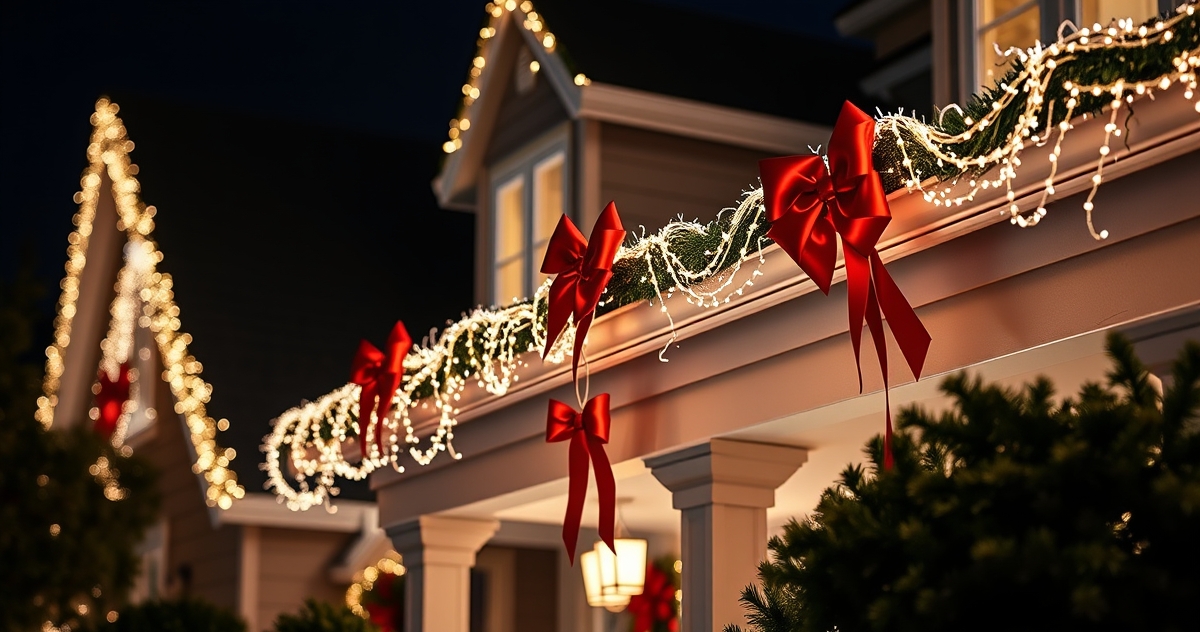
- Garlands woven through railings and fences: If your walkway features a railing, fence, or low garden border, garlands with integrated Mini Lights in warm white or cool white create a lush, layered look that complements stake lighting beautifully.
- Wreaths and bows at entry points: Frame your front door and mailbox post with coordinating wreaths and bows that tie your pathway lighting to the rest of your holiday décor.
The best pathway lighting designs don't just illuminate a path — they tell a visual story that begins at the street and ends at your front door. Every element, from the color temperature of your Mini Lights to the placement of your last stake before the porch steps, contributes to that story.
Frequently Asked Questions
How many pathway lights do I need for a typical New Hampshire home walkway?
For an average residential walkway of 20 to 30 feet, plan on 6 to 8 pathway stakes, spaced every 6 to 7 feet on alternating sides of the path. This provides even illumination without dark gaps and avoids the cluttered appearance of over-lit walkways. For longer driveways or garden paths, maintain the 8-foot spacing rule and consider slightly brighter Mini Lights to keep visibility consistent throughout the run.
Should I use warm white or cool white Mini Lights for my pathway?
The right choice depends on your home's exterior color, architectural style, and how your other outdoor lights are configured. Warm white Mini Lights create a soft, amber-toned glow that feels welcoming and traditional — ideal for classic New England architecture with brick or wood exteriors. Cool white Mini Lights offer a crisp, modern look that pairs well with contemporary homes and blue or silver holiday color schemes. Most importantly, match your pathway lights to your porch and roofline lights for a cohesive, professionally designed appearance.
Can I leave pathway lighting stakes in the ground through a New Hampshire winter?
Metal and heavy-duty plastic stakes can generally survive a New Hampshire winter in the ground, but we recommend removing them before the ground freezes hard — typically by late November or early December depending on your region. Frozen ground makes removal difficult and risks bending or breaking stakes. Cord-and-bulb sets should always be removed and stored to protect the wiring and connections from prolonged freeze-thaw cycles that degrade insulation over time.
What's the best way to protect outdoor pathway light connections from freezing rain?
Use outdoor-rated cords (look for SJTW or SJTOW ratings), apply a small amount of dielectric grease to all plug connections, and elevate connection points off the ground whenever possible. Always connect pathway lighting to a GFCI outlet for safety. After the first major weather event of the season — whether freezing rain, heavy snow, or a hard frost — inspect all connection points to catch any moisture infiltration early before it causes a failure or safety hazard.
Is it worth hiring a professional to install pathway lighting in New Hampshire?
For simple runs of 6 to 8 stakes on a short walkway, many homeowners handle installation themselves. However, professional installation is worth considering when you're coordinating pathway lighting with roofline, porch, and tree lighting as a unified system; when your property has complex landscaping, long driveways, or multiple pathways; or when you want the peace of mind that comes from properly weatherproofed connections, professional-grade products, and a crew that handles installation, maintenance, and removal. The result is a polished, cohesive look that's difficult to achieve without experience and the right tools.
A beautiful, safe walkway starts long before the first guest arrives — it starts with a thoughtful plan, the right products, and attention to the details that New Hampshire's climate demands. Whether you're tackling a simple stake-and-cord setup yourself or looking to coordinate pathway lighting with a full exterior holiday display, Holiday Lights Decor New Hampshire has been helping homeowners and businesses across the state get it right since 2006. Explore our residential services or reach out to our team to discuss a custom pathway and exterior lighting design for your home this season.